Wisdom from Well Woman: How Chiropractic Care Positively Impacts The Menstrual Cycle
Can chiropractic care help with period pain, PMS, hormonal balance, or cycle irregularities?
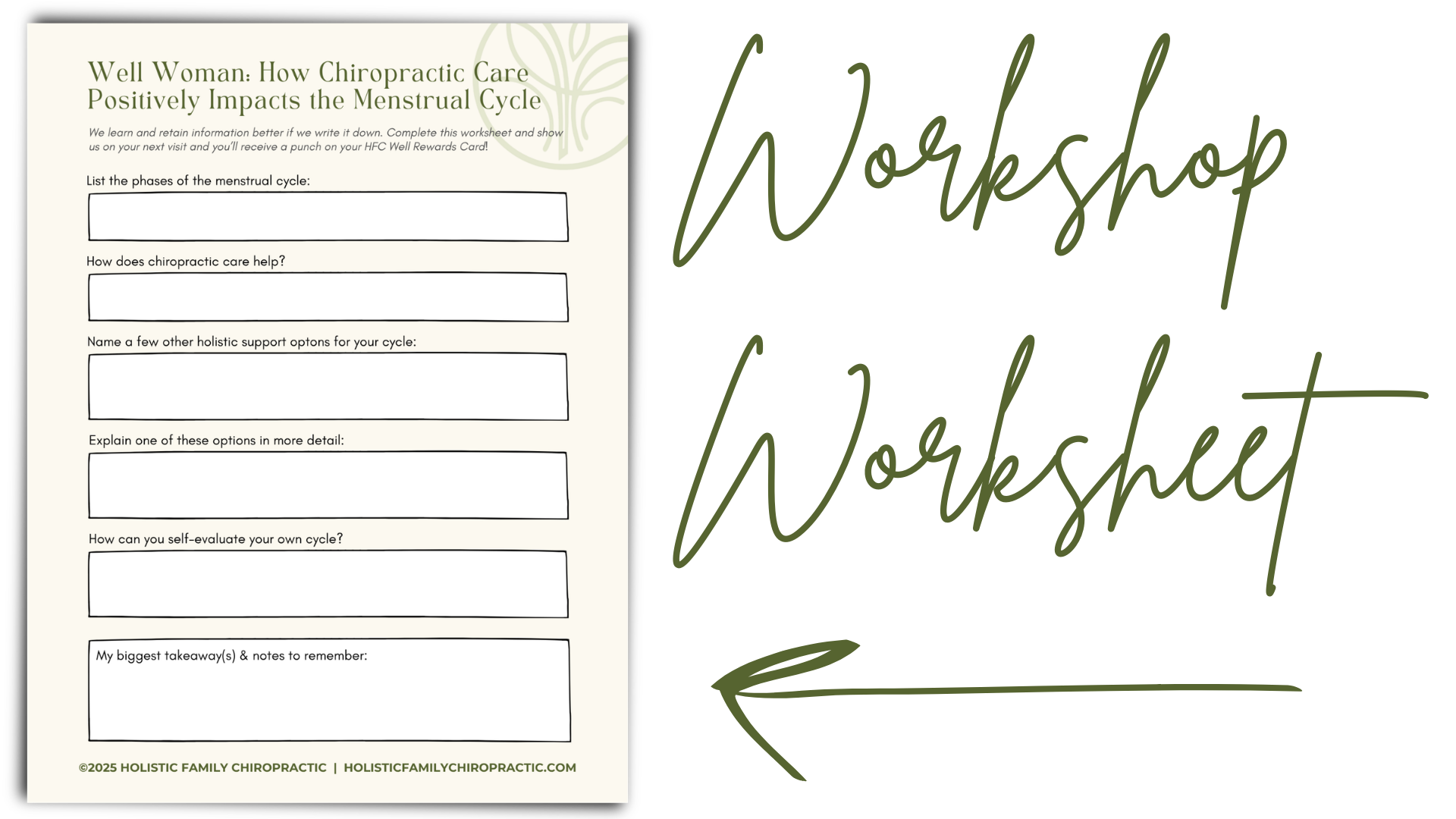
Well Woman: How Chiropractic Care Positively Impacts the Menstrual Cycle Worksheet
How is the menstrual cycle connected to the spine and nervous system?
Your menstrual cycle isn’t just a reproductive event. It’s a full-body process guided by the nervous system and hormones working together.
Think of hormones as text messages and the nervous system as the phone service. When signals are clear, things run smoothly. When there’s interference, like chronic stress or spinal tension, messages can get delayed, scrambled, or dropped. That’s when symptoms can become more of an issue.
Why stress often shows up as period problems
The nervous system is the body’s main control center. It decides when to rest, repair, ovulate, and menstruate.
When stress stays high, the body shifts into survival mode. That can affect ovulation, increase cramps, worsen bloating, and intensify mood changes. Supporting nervous system regulation helps the body move out of “always on” and back into balance.
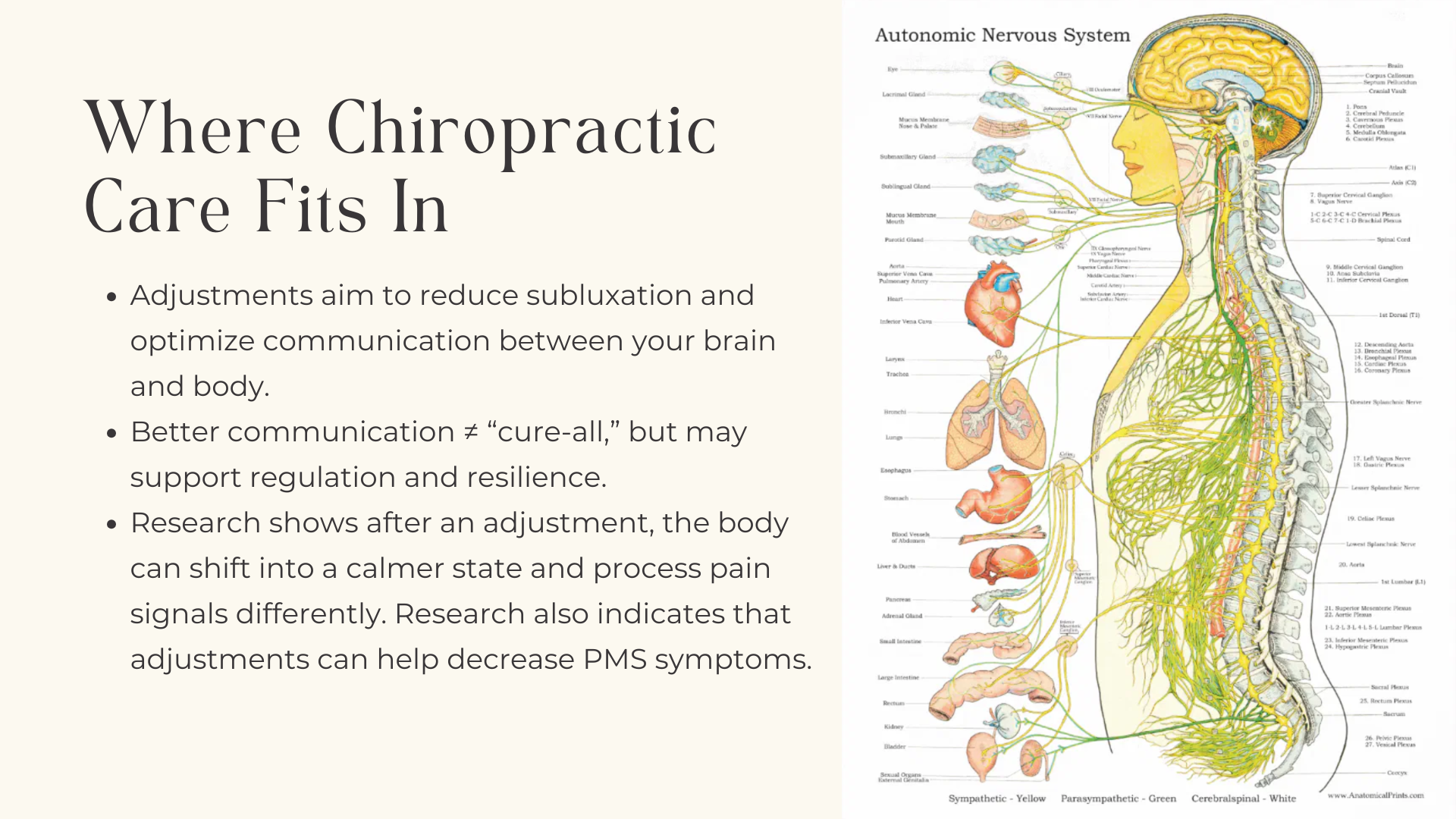
Chiropractic care focuses on reducing tension and improving communication between the brain and body, giving your system a better chance to self-regulate.
How chiropractic care supports menstrual health (beyond pain relief)
Chiropractic care isn’t about forcing the body to change. It’s about improving how the body communicates so it can do what it’s already designed to do.
With better nervous system input, many patients notice:
fewer stress-related symptoms leading up to their cycle
improved awareness of patterns in energy, mood, and discomfort
better tolerance to normal hormonal shifts
It’s less about “fixing” anything and more about giving your body clearer signals so it can handle those monthly shifts with a little more ease.
Daily habits that support a healthier cycle
Chiropractic care works best when paired with simple, supportive habits.
Eat in a way that reduces inflammation. Focus on colorful vegetables, quality protein, and healthy fats. This gives your body the raw materials it needs to manage hormone shifts more smoothly.
Support your nervous system with key nutrients. Magnesium and B vitamins help with muscle tension, energy, and mood. These nutrients are commonly depleted during stress.
Choose gentle, consistent movement. Walking, stretching, or yoga helps circulation and signals safety to the nervous system. This isn’t about pushing harder; it’s about staying connected to your body.
Each of these supports the same goal: helping your system feel safe enough to regulate well.
Why tracking your cycle actually matters
Your cycle gives clues long before something feels “off.”
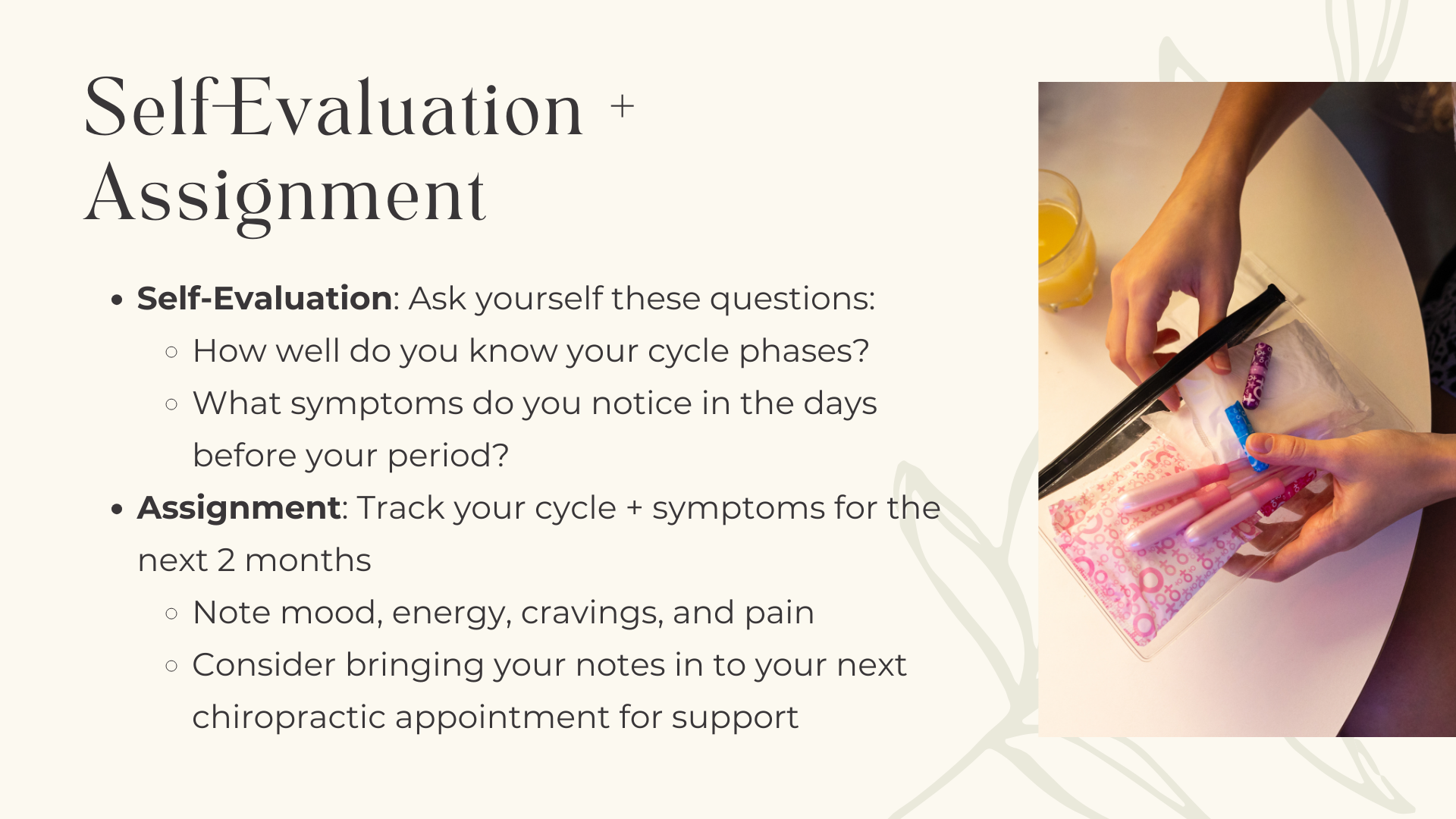
Track things like timing, energy, mood, sleep, and physical symptoms. Patterns often matter more than single symptoms. Sharing that information helps guide care and creates a clearer picture of how your body responds to stress and support.
Your cycle is feedback, not a flaw
Painful or disruptive periods aren’t something to ignore or push through. They’re feedback.
When the nervous system gets support and stress is better managed, the body often responds with more predictable, manageable cycles. Chiropractic care acts like a coach on the sidelines. It works to guide, adjust, and help your body play the long game with more resilience.
So, maybe you’ve been dealing with super painful periods, and you feel like there’s nothing left to try. We’re here to gently remind you that your body isn’t broken. It’s communicating. We’d love the chance to help you learn to listen in new ways.