Takeaways from Think Well: Self-Care Myths Debunked
Are You Falling for These Self-Care Myths?
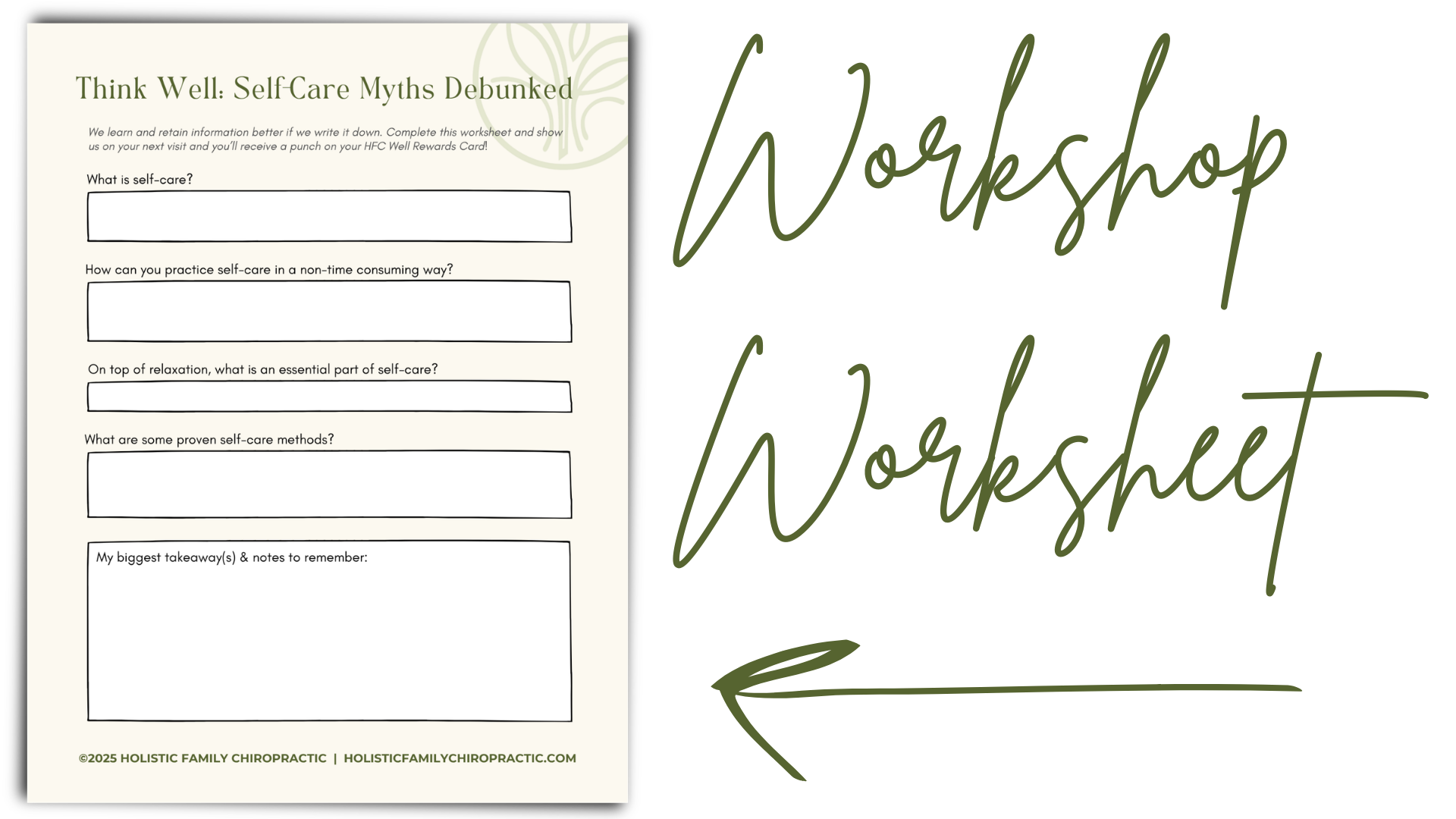
Think Well: Self-Care Myths Debunked Worksheet
Self-care has become a popular topic in recent years, often portrayed as luxurious spa days, expensive products, or picture-perfect rituals. But the real purpose of self-care runs much deeper. It’s about supporting your body, protecting your energy, and creating habits that help you stay resilient in your daily life.
And yet, despite how common the term has become, misconceptions about self-care are everywhere. Clearing up these myths can make it easier to choose habits that genuinely support your health without the pressure, guilt, or confusion. Here are some of the most common myths and a handful of research-supported self-care techniques you can integrate into your daily routine.
Myth 1: Is Self-Care Selfish?
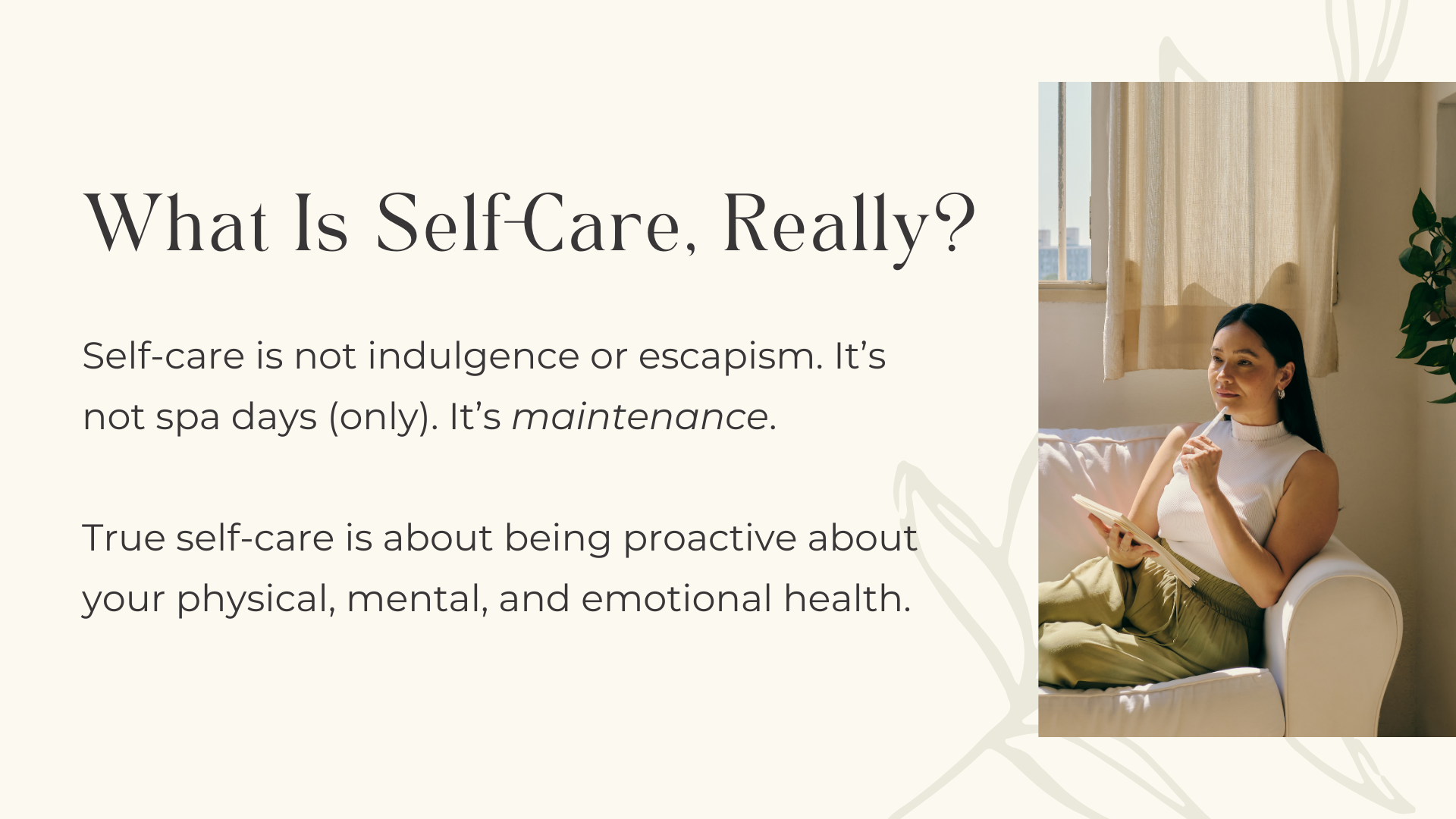
This misconception holds many people back. In reality, self-care is a form of maintenance.
When physical, mental, and emotional needs are supported, it becomes easier to show up with patience, clarity, and compassion. It’s similar to putting on your oxygen mask before helping others; your well-being makes you more capable of serving the people who depend on you.
Myth 2: Does Self-Care Really Take Too Much Time?
It’s easy to assume that self-care requires hours of free time, but most effective practices take only a few minutes.
Many people spend ten minutes or more each day scrolling, zoning out, or multitasking without realizing it. Redirecting even a fraction of that time toward a quick stretch, a brief walk, or intentional breathing can make a meaningful difference. Small, consistent habits compound over time.
Myth 3: Is Self-Care Something You Have to Do Alone?
Some forms of self-care are personal and private, but human connection plays a major role in overall health.
Loneliness is one of the biggest drivers of chronic stress. Sometimes the most restorative self-care involves being around others. Meeting a friend for a walk, joining an interest group, or participating in communal activities all foster a sense of belonging.
Myth 4: Is Self-Care Just Pampering and Indulgence?
Self-care is often marketed as pampering, but its most powerful forms are far simpler. It looks like going to bed when you’re tired instead of pushing through, setting boundaries that protect your time, or fueling your body with what it actually needs.
These choices may not feel glamorous, but they create long-term stability and resilience.
Effective Self-Care Strategies Backed by Science
Here are several science-backed strategies that support physical and mental well-being:
Move well: Regular movement enhances neuroplasticity, which is your brain's ability to adapt and heal. Even ten minutes of intentional movement can elevate mood, support spinal health, and reduce inflammation.
Prioritize sleep: Quality sleep strengthens the immune system, improves memory, and regulates emotions. Creating a consistent bedtime routine and reducing overstimulation in the evening can significantly improve sleep quality.
Eat an anti-inflammatory diet: Foods rich in vegetables, healthy fats, and clean proteins help stabilize energy levels and support brain function. Reducing inflammatory foods can also lessen joint discomfort and improve overall vitality.
Stay hydrated: Hydration affects everything from cognitive clarity to spinal disc health. Drinking consistently throughout the day helps the body function efficiently.
Practice mindfulness: Mindfulness practices, such as intentional breathing, gratitude journaling, or guided awareness, have been shown to increase gray matter in areas of the brain linked to memory, empathy, and emotional balance.
How to Create a Simple, Personalized Self-Care Plan
Effective self-care doesn’t require a complete overhaul. Choose one or two practices that feel realistic and begin there. A ten-minute walk after dinner, turning off screens an hour before bed, or pausing for gratitude each morning can set a powerful foundation.
☞ If you’d like support building your self-care plan, here’s a tool we like to utilize around the office!
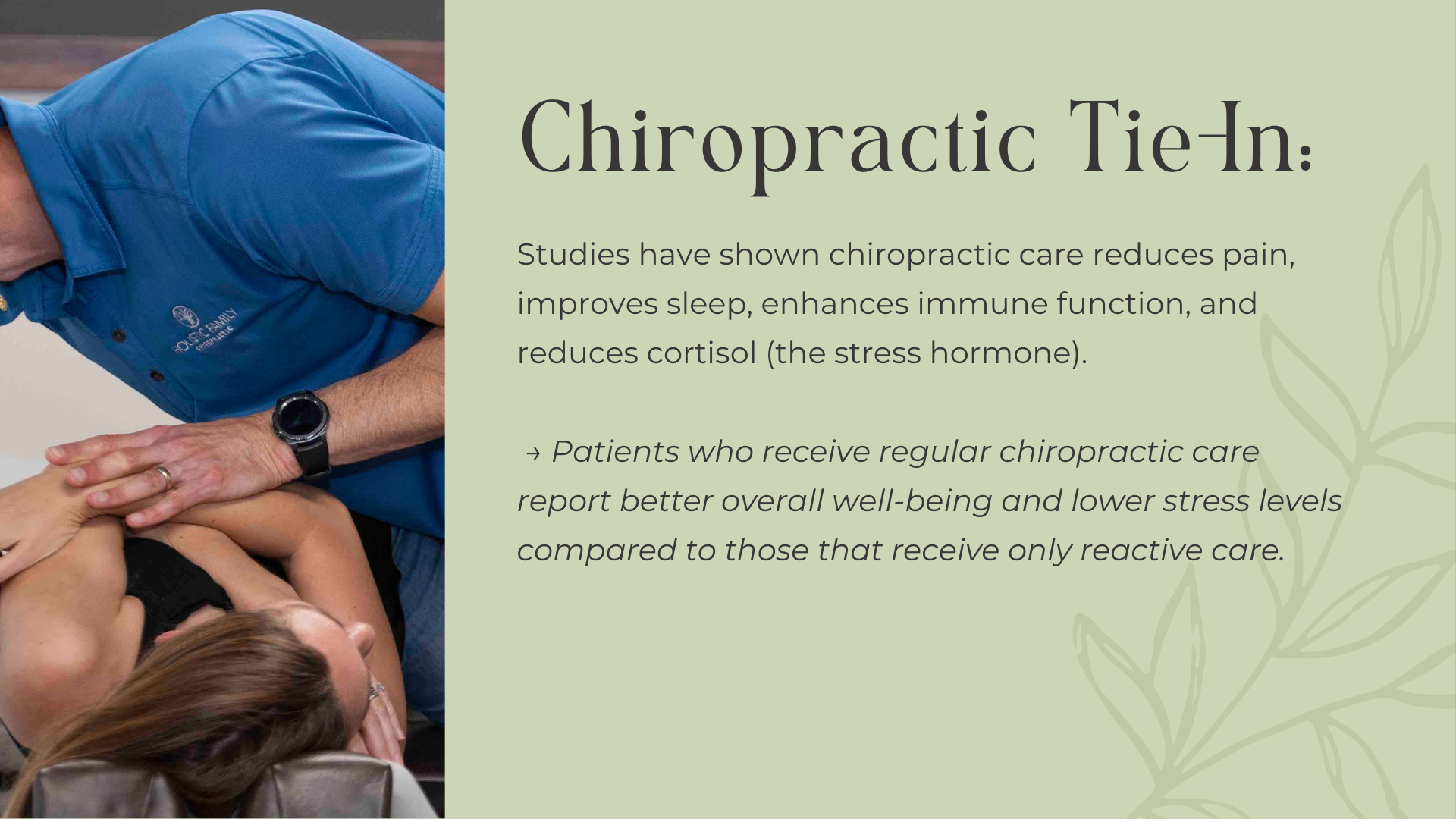
If it’s been more than 30 days since your last adjustment, this is a great time to schedule your next visit and support the systems that keep you functioning at your best. Your health is worth the commitment.