
Lessons from Well Woman: Can Chiropractic Care Help During Pregnancy?
Is chiropractic care safe during pregnancy? How does it support mom and baby?
Pregnancy is one of the most remarkable things the human body can do. It is also one of the most physically demanding. From the first trimester through labor and delivery, a mother's spine, pelvis, and nervous system are under a level of stress that is unlike anything else the body navigates. And yet, for most pregnant women, the list of safe and effective options for managing that stress is remarkably short.
Chiropractic care belongs on that list. It always has. Here is what expectant mothers and their families need to know.
Understand what pregnancy actually does to your spine and pelvis
The physical changes of pregnancy do not happen gradually and gently. They happen quickly and significantly, and they place real structural demands on the body from very early on.
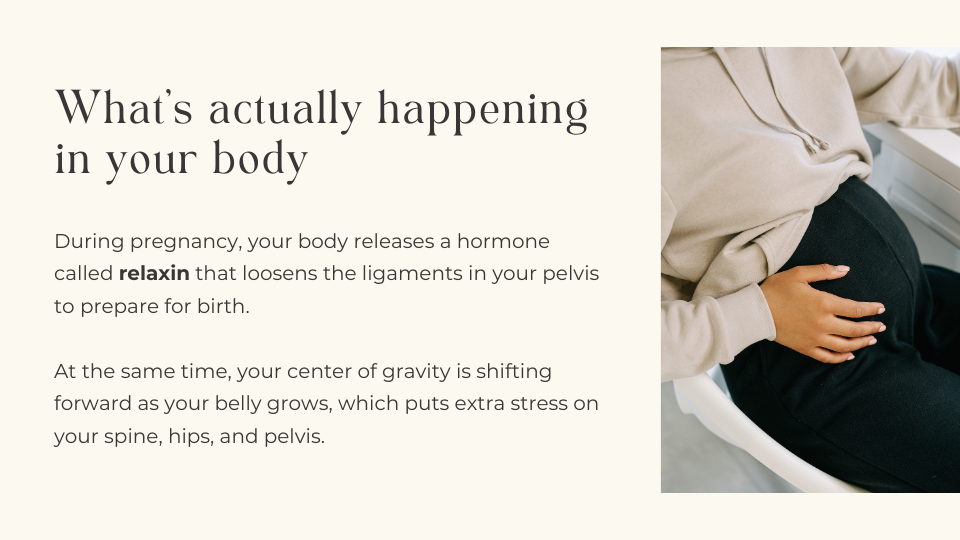
One of the first changes is hormonal. A hormone called relaxin is released during pregnancy to loosen the ligaments throughout the body, particularly in the pelvis, in preparation for birth. While this loosening is necessary and purposeful, it also means that the joints and structures supporting the spine and pelvis become less stable at exactly the time when the body is carrying more weight and stress than usual.
As the pregnancy progresses, the center of gravity shifts forward. The growing belly pulls the lower spine into increased extension, placing sustained pressure on the lumbar vertebrae, the sacrum, the hips, and the pelvis. Muscles that were not designed to carry that load for extended periods begin to compensate, which creates tension, restriction, and pain.
The result is a predictable set of symptoms that brings many pregnant women through our doors: low back pain, sciatic nerve pain, pelvic pressure and instability, round ligament pain, neck and upper back tension, and sleep disruption from discomfort.
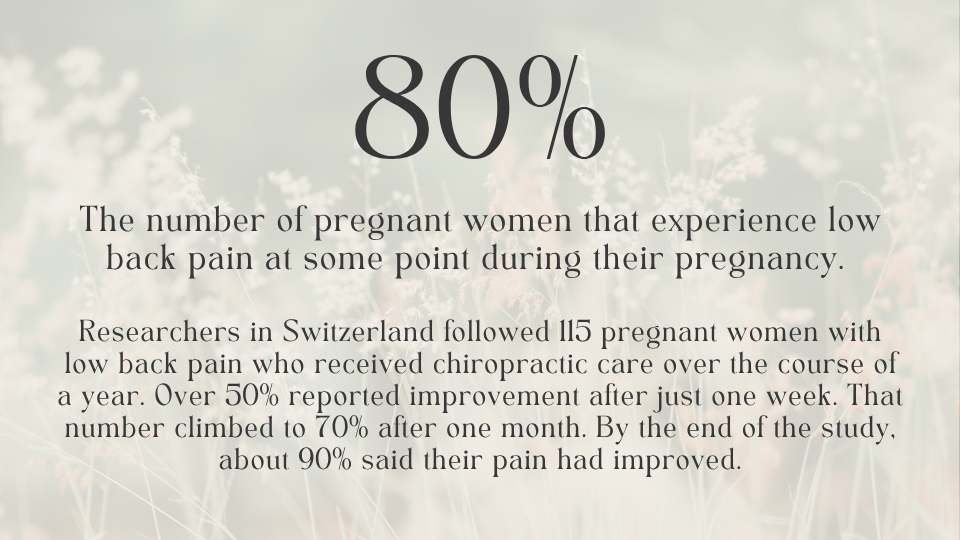
Research confirms that 80% of women will experience low back pain at some point during pregnancy. For many, the pregnancy does not create a new problem so much as it amplifies an existing one that was previously manageable.
Know that chiropractic care during pregnancy is safe and well-supported
The first question most pregnant women ask when chiropractic care comes up is whether it is safe. The answer is yes, and it is not just chiropractors saying so.
The American Pregnancy Association recognizes chiropractic care as safe during pregnancy. Chiropractors receive specific training in prenatal care as part of their standard education, and many pursue additional certifications in pregnancy-specific techniques. Malpractice insurance rates for chiropractors are among the lowest of any healthcare provider, which reflects the safety record of the profession.
During prenatal visits, adjustments are gentle, specific, and modified appropriately for each stage of pregnancy. Specialized positioning and support equipment, including pillows designed to safely accommodate the belly during face-down positioning, allow pregnant women to receive care comfortably and safely throughout all three trimesters.
The research backs this up with measurable outcomes. A study following 115 pregnant women with back pain who received chiropractic care found that more than 50% reported improvement after just one week of care. That number climbed to 70% after one month, and by the end of the study, approximately 90% of the participants had experienced significant pain relief and improved function.
Learn how chiropractic care supports labor and delivery
The benefits of chiropractic care during pregnancy extend well beyond pain relief. One of the most significant areas of impact is labor and delivery itself.
The pelvis plays a central role in how labor progresses. When the pelvis is balanced, mobile, and aligned, the baby has more room to move into the optimal position for delivery. When the pelvis is restricted, rotated, or asymmetrical, labor can be longer, more difficult, and more likely to require intervention.
Research from New Zealand examined pelvic floor muscle function in pregnant women before and after chiropractic adjustments. The results showed that following an adjustment, women demonstrated greater pelvic floor muscle relaxation at rest. That relaxation is precisely what the body needs during active labor to allow delivery to progress efficiently and comfortably.
The impact on labor duration is also documented. One study found that women who received chiropractic care during pregnancy experienced a 25% reduction in average labor time for first-time mothers, and a 31% reduction for mothers who had previously given birth. These are not marginal differences. They represent a meaningful shift in one of the most physically intense experiences of a woman's life.

Understand the Webster technique and what it does
The Webster technique is one of the most widely used chiropractic approaches in pregnancy care, and it deserves a specific explanation because it is frequently misunderstood.
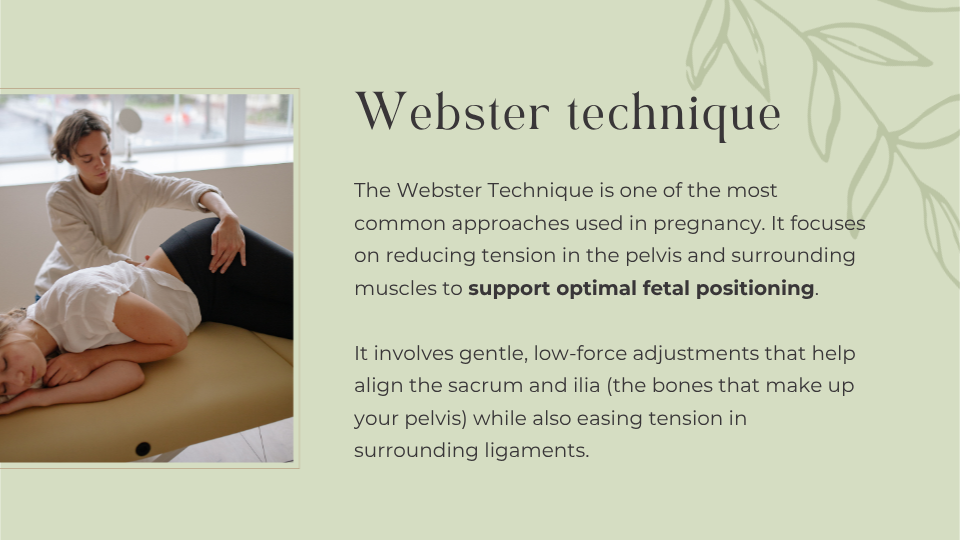
This technique is a specific chiropractic analysis and adjustment focused on the sacrum and pelvis. It addresses the alignment of the sacrum, the balance of the surrounding musculature, and the tension in the round ligaments that support the uterus. The goal is to restore balance and function to the pelvis so that the baby has the best possible environment for positioning as birth approaches.
It is important to clarify what the Webster technique does not do: it does not move babies. That is the role of an obstetrician. What it does do is create the structural conditions in the mother's body that allow the baby to move into an optimal position naturally. Many mothers with breech presentations have seen those presentations resolve in conjunction with Webster technique care. The technique is not a guarantee, but it is a meaningful and safe intervention that supports the body's own intelligence and capacity.
Being a certified Webster technique provider means having completed specific training and examination in this approach beyond standard chiropractic education. If you are pregnant and seeking chiropractic care, asking whether your provider is Webster-certified is a reasonable and worthwhile question.
Start chiropractic care as early as possible during pregnancy
When should a pregnant woman start chiropractic care? The straightforward answer is: as soon as possible, and ideally before pregnancy begins.
Ideally, women who are planning to become pregnant would have their spine and pelvis evaluated before conception. Identifying and addressing existing misalignments and dysfunction before the added stress of pregnancy creates a much stronger foundation for what is coming. A body that is already functioning well at the start of pregnancy is better equipped to adapt to the significant changes ahead.
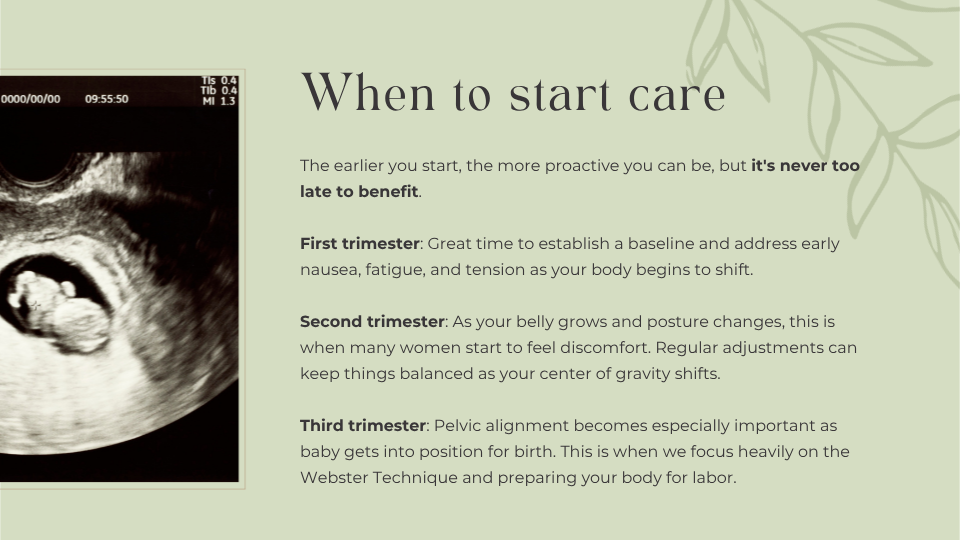
During the first trimester, getting established with a chiropractor is wise even if symptoms are not yet present. The hormonal and structural changes are already underway, and early care helps the body adapt more smoothly as those changes progress.
By the second trimester, spinal stress is becoming more noticeable for most women. This is often when pain and discomfort begin to surface. Addressing them early in this phase is more effective than waiting until they are more established.
In the third trimester, pelvic alignment becomes especially critical as the body prepares for labor. If there are breech presentations or significant pelvic restrictions at this stage, chiropractic care can still be highly effective, though the earlier these issues are addressed, the more time the body has to respond.
It is never too late to be evaluated. Even in the final days of pregnancy, releasing restrictions and restoring nervous system communication can make a meaningful difference in how the body moves through labor and delivery.
Use these practical tips to support your body between visits
A few simple habits can make a significant difference in how the spine and pelvis hold up throughout pregnancy.
Sleep with a pillow between the knees. This supports pelvic alignment and prevents the twisting and rotation that stresses already-loosened ligaments overnight. It is one of the most impactful and easiest adjustments a pregnant woman can make to her daily routine.
Keep moving. Gentle walks, swimming, and prenatal yoga all help maintain muscular support and strength throughout the pregnancy. Strengthening the muscles that support the spine and pelvis makes delivery easier and recovery faster. Avoid prolonged standing on hard floors, which increases stress on the feet and travels directly up through the pelvis.
Mind your posture consistently. As the belly grows, the temptation to slouch forward or arch the lower back increases. Both patterns add unnecessary stress to an already challenged system. Sitting on a posture disc or a pregnancy exercise ball encourages movement, engages the core, and keeps the spine from settling into static, strained positions.
Consider prenatal massage as a complement to chiropractic care. The combination of soft tissue work and spinal adjustments addresses the full picture of muscular and structural stress during pregnancy.
Chiropractic care is not an alternative to prenatal medical care. It is a complement to it, one that addresses the structural and neurological dimensions of pregnancy in ways that nothing else does. A nervous system that communicates clearly, a pelvis that moves freely, and a spine that is properly aligned give both mother and baby the best possible foundation for a healthy pregnancy and delivery.
If you are pregnant, planning to become pregnant, or know someone who is, we encourage you to schedule an appointment. It is never too early to start, and the potential benefits from pain relief to labor support to better outcomes are well worth it. Contact our office today to get on the calendar.