
Key Insights from: How to Prep Your Body for Flu Season
How do you actually boost your immune system before flu season hits?
Flu season doesn't start in October. It's about building year-round tolerance so your body can handle whatever comes its way.
Flu season tends to get blamed on the calendar, but the truth is your body is susceptible to illness all year long. What actually changes with the seasons is how well-prepared your body is to handle it.
Patients who receive regular chiropractic care, generally every few weeks or more consistently over time, tend to report getting sick less often.
This isn't about avoiding germs entirely. Viruses and bacteria are everywhere, regardless of the season. It's about how resilient and prepared your body is when it encounters them.
Interestingly, during past flu epidemics, patients who received chiropractic care fared remarkably well compared to those who didn't. The goal isn't to dodge every germ; it's to strengthen your body's ability to respond effectively when it meets one.
What's actually happening when you get sick
When a virus enters your body, typically through your nose or mouth, your immune system responds by raising your temperature and increasing inflammation to fight it off. This is also why areas of your body that already have some low-level inflammation, even if you don't normally notice it, tend to flare up more noticeably when you're sick.
The stronger and more responsive your immune system is, the faster and more efficiently it can fight off illness, which often means a shorter recovery time overall.
How your nervous system coordinates your immune response
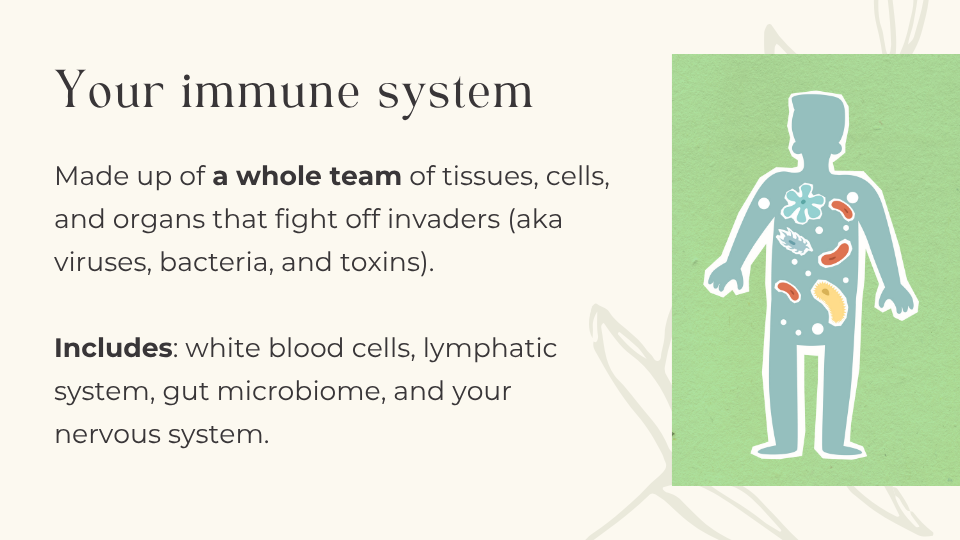
Your immune system isn't just white blood cells circulating through your bloodstream. It's deeply connected to your nervous system, your gut, and your lymphatic system, a relationship known as neuroendocrine immunology.
Think of your spine as the communication lifeline between all three. When your nervous system is functioning properly, your body can send immune resources exactly where they're needed, efficiently and effectively. When alignment is off, that communication gets a little static-y, making it harder for your body to respond quickly to a threat.
Your lymphatic system plays a key role here too, and movement is what keeps it running well. Just like stagnant water becomes unhealthy, a body that doesn't move enough lets waste and toxins build up instead of being properly cleared.
What weakens your immune defenses
A few everyday habits can quietly lower your immune resilience:
Too much sugar suppresses the activity of neutrophils, a key immune cell your body relies on to fight infection.
Poor sleep limits your body's ability to recover and reset overnight, leaving fewer resources available to fend off illness.
Chronic stress raises cortisol, which actively suppresses immune cell production over time.
Vitamin D deficiency is more common than you'd think, even in summer, since producing adequate vitamin D naturally requires nearly full skin exposure for 30 minutes.
Your gut health plays a surprisingly large role here, too. As much as 70 to 80% of your immune system is housed in your gut, meaning poor gut health, often driven by low fiber, excess sugar, or too much processed food, can be a major contributor to inflammation throughout your entire body.

Support your gut to support your whole body
Your gut doesn't just handle digestion and immunity; it's also where a significant amount of serotonin, your body's natural "feel good" chemical, is produced.
When your gut is inflamed and out of balance, it becomes harder to feel well enough to want to make the healthy choices your body actually needs.
While adjustments can help reset communication throughout your nervous system, dietary choices are something only you can make day to day.
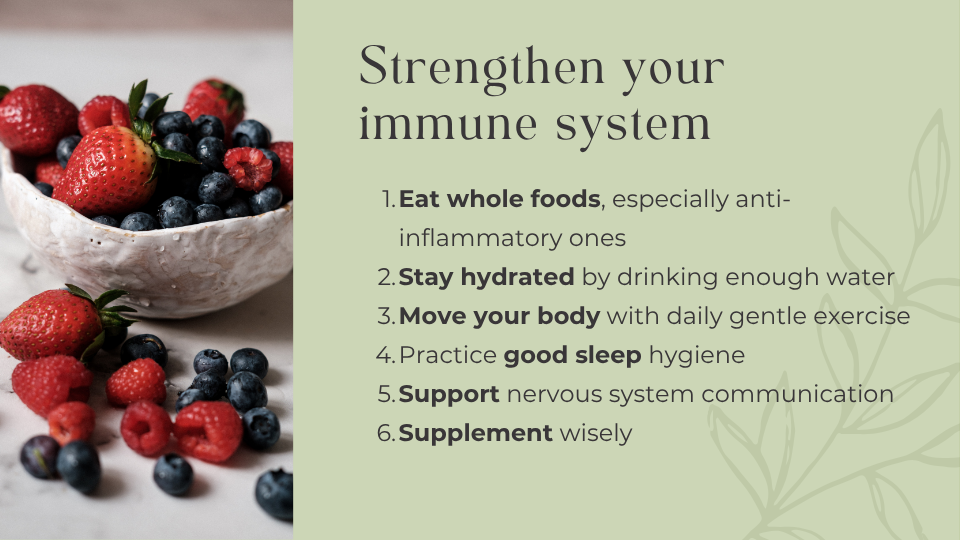
Prioritizing whole, anti-inflammatory foods (think berries, vegetables, and lean proteins) makes a meaningful difference in supporting gut health and, in turn, your immune system.
Build simple daily habits that strengthen your immune system
A few consistent habits go a long way in preparing your body for whatever comes its way:
Eat whole foods. If it could be picked, grown, or caught in nature, it's a whole food. Processed foods, even ones that seem harmless, often contain far more additives than they used to.
Stay hydrated. Dehydration alone can start to reduce your immune function, so aim for roughly half your body weight in ounces of water daily.
Move your body daily. Movement helps distribute nutrients throughout your body and supports your lymphatic system in clearing out waste.
Prioritize consistent sleep. Go to bed and wake up at the same time, avoid screens an hour before bed, and keep your room cool and dark.
Supplement wisely, rather than trying to take everything available. Vitamin D, vitamin C, zinc, and fish oil are commonly recommended, especially as sunlight exposure decreases.
Avoid the habits that undermine your progress
Just as important as what you do is what you avoid:
Sugar binges directly suppress white blood cell activity, right when you need it most.
Excess alcohol and ultra-processed foods both contribute to inflammation throughout your body.
Touching your face frequently, especially after touching commonly shared surfaces, gives germs a direct route in.
Overcommitting your time and energy without leaving room for rest wears down the same reserves your immune system needs to draw on.
If your body is already close to its limit, these habits can be the tipping point that pushes you into getting sick.
Try a natural immune-support remedy at home
A simple homemade remedy using lemon, ginger, garlic, honey, and unsweetened pineapple juice (with a touch of cayenne pepper, if you'd like some extra kick) can serve as a natural immune booster. Garlic in particular offers antibacterial, antifungal, and antiviral properties.
Here’s the recipe:
Juice of 6 Fresh Lemons
1 Bulb of Fresh Garlic
2 Tsp. Ginger
2 Tbsp. Honey
3 Cups Unsweetened Pineapple Juice
¼ Tsp. Cayenne Pepper Powder
Blend ingredients in a blender. Store in a glass jar in the fridge. Take one cup, 4x daily.
Keep your sinuses supported, too
Since viruses often enter and attach through the nasal passages, keeping your sinuses moist can help reduce the likelihood and duration of illness.
A xylitol-based saline solution is a simple, non-habit-forming option you can use daily to support healthy sinus function, particularly helpful if you're sensitive to seasonal allergies or indoor air pollutants.
Choose a few habits to start with today
Building immune resilience doesn't require overhauling your entire lifestyle overnight. A few manageable starting points:
Add one extra serving of vegetables to your day.
Add one additional glass of water to your daily routine.
Walk for 15 minutes each day.
Track your sleep and aim for seven or more hours a night.
Consider a simple immune-supporting supplement.
These aren't habits meant only for flu season. They're worth carrying with you year-round, since your body's need for resilience never really goes away.
Let's get your body ready for whatever's going around
Supporting your immune system starts with keeping your nervous system functioning the way it's designed to. If it's been a while since your last visit, now's a great time to check in.