Think Well: How to Make Meditation Fun & Easy
(and Why Your Nervous System Will Thank You)
If you’ve ever thought, “Meditation sounds nice… but I don’t have time,” or “My brain won’t shut up long enough to meditate,” you’re not alone.
The good news: meditation doesn’t have to look like sitting on a cushion for an hour in complete silence. It can be simple, flexible, and realistic for real life—kids, jobs, stress, and all.
At its core, meditation is a daily way to help your nervous system unclench.
And when your nervous system calms down, your body has a much better shot at doing what it’s designed to do: heal, recover, and feel good.
Let’s break down the “why” and the “how” in a way that’s easy to use—starting today.
Why meditation matters more than ever
Life moves fast. Technology is always “on.” We’re juggling more, thinking more, reacting more—often without realizing it.
Over time, that can overstimulate your nervous system.
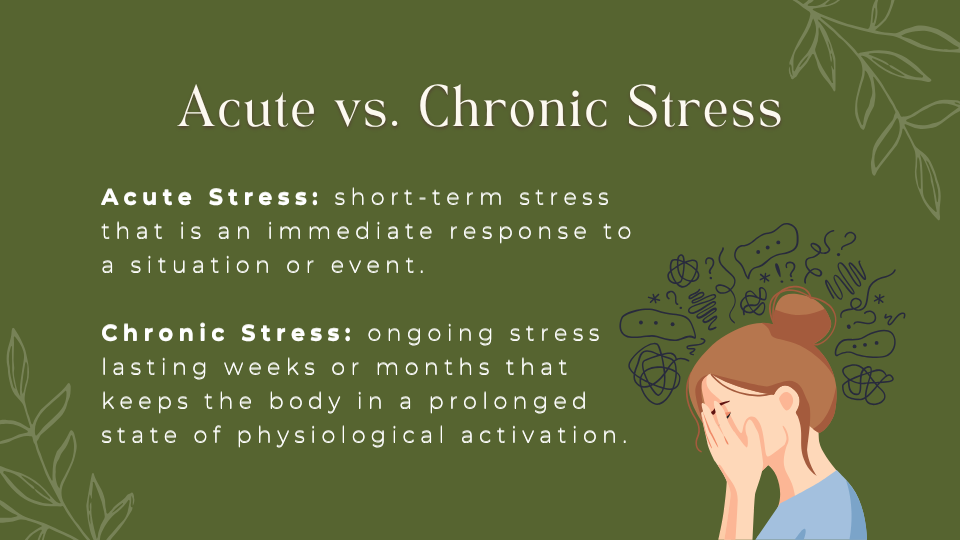
A little stress here and there (acute stress) is normal. It’s your body’s built-in survival response. But when stress becomes constant (chronic stress), your body can start living in a state of “high alert” even when there’s no real emergency.
And that’s when many people begin noticing patterns like:
Tight shoulders and neck that won’t relax
Jaw clenching or headaches
Feeling “wired but tired”
Trouble sleeping deeply
Digestive issues or low energy
Increased inflammation and pain sensitivity
Feeling snappy, anxious, or overwhelmed more easily
This isn’t “all in your head.” It’s your nervous system doing its job and trying to protect you. The problems occur when that system never gets the signal that it’s safe to power down.
Meditation is one way to send that signal.
Your nervous system has two main modes
Think of your nervous system as having two settings:
1) Fight or flight (sympathetic mode)
This is your “get it done,” “stay sharp,” “protect yourself” setting.
It can show up during obvious stress (a scary moment) and everyday stress (traffic, work pressure, conflict, endless notifications).
When this mode stays on too long, your body may ramp up stress hormones like cortisol and increase muscle tension—two things that often don’t help pain, inflammation, or sleep.
2) Rest and digest (parasympathetic mode)
This is your “repair,” “restore,” “recover” setting.
It supports:
Healing and tissue repair
Healthy digestion
Better sleep depth
Emotional regulation
Lower muscle tension
Meditation helps you practice shifting out of fight-or-flight and back into rest-and-digest, even if your day is still busy.
In other words, meditation isn’t about escaping your life. It’s about helping your body feel steady inside your life.
What meditation actually is (and what it isn’t)
A lot of people avoid meditation because they think they’re “bad” at it. Usually, that’s because of a few common myths.
Meditation is:
Focused awareness
A tool to calm and reset the nervous system
A practice of noticing the present moment
Something you can do in small, realistic chunks
Mindfulness—often used alongside meditation—is basically “moment to moment” awareness, with a key ingredient: non-judgment. That means you notice what’s happening (breath, thoughts, tension, emotions) without beating yourself up for it.
Meditation is not:
Emptying your mind completely
Being perfectly calm the whole time
Sitting in silence for hours
Wearing special clothes or doing it “the right way”
If your mind wanders, you’re not failing. You’re practicing.
The moment you notice you’ve wandered and gently return to your breath or focus point… that is meditation.
The “built-in pharmacy” idea (why this is bigger than relaxation)
Here’s a powerful way to think about it:
Your brain and nervous system have the ability to produce chemicals that support balance: calm, focus, resilience, and a sense of well-being. You’re not relying on something outside your body to create that shift. You’re learning how to access what’s already built in.
Meditation helps train your system to move toward those balancing chemicals and signals more easily.
That’s why even a few minutes can matter.
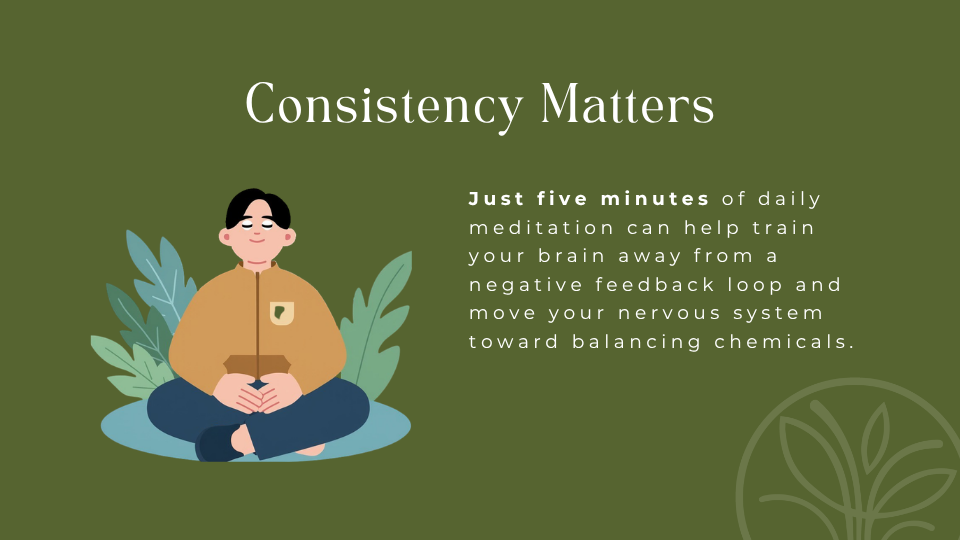
And it’s also why consistency often beats intensity.
Five minutes daily can do more for your nervous system than one long session once in a while.
Why your brain repeats the same stressful thoughts (and how meditation helps)
Ever notice how you can replay the same worry, argument, or “what if” over and over?
That looping is incredibly common, especially under chronic stress.
When your nervous system is in protection mode, it tends to repeat patterns because repetition feels safer than uncertainty. Your body is basically saying, “Let’s keep thinking about this so we don’t get blindsided.”
Meditation gives you a way to interrupt that loop.
Not by forcing it away, but by building the skill of noticing it and redirecting your attention again and again, without judgment.
Over time, that can help you feel less “stuck” in the same mental grooves.
The surprising connection between meditation and your body
Stress doesn’t just stay in your thoughts. It shows up physically.
That’s why many people feel stress as:
A tight neck
A stiff low back
A clenched jaw
A heavy chest
Shallow breathing
Restless legs
A tense belly
Your nervous system and your muscles are in constant conversation. When the nervous system is on high alert, the body often becomes guarded.
That’s one reason a holistic approach matters: calming the nervous system supports physical change, and improving physical alignment and movement supports nervous system change.
It’s a feedback loop.
A calmer mind supports a calmer body… and a calmer body makes it easier for your mind to settle.
Biometrics: a simple way to “see” your nervous system resilience
If you wear a smartwatch or smart ring (like Oura, WHOOP, Apple Watch, etc.), you’ve probably seen metrics like sleep quality, resting heart rate, or heart rate variability (HRV).
You don’t need to become a data nerd, but it can be helpful to know this:
HRV is often used as a general marker of resilience and recovery.
A lower score can be a sign that your system is taxed.
Over time, supportive habits like meditation, better sleep, exercise, and nervous system care can improve those trends.
No one number defines your health. But tracking patterns can help you notice what truly helps your body feel better.
Sleep, stress, and the “renew your mind” effect
If you’re not sleeping deeply, your nervous system doesn’t fully reset.
Deep sleep is one of the ways your body and brain “clean house.” Many people notice that when sleep is lighter or shorter, their stress tolerance drops fast.
Meditation can support sleep by helping your body shift into a calmer state before bed and by reducing that “spinning thoughts” feeling.
It can also make it easier to return to calm after you wake up stressed at 3 a.m. (If you know, you know.)
“I can’t meditate” is usually a nervous system issue, not a willpower issue
One of the biggest hang-ups people have is this:
“I can’t stop thinking.”
Here’s a more helpful reframe: you don’t need to stop thinking. You just need a focus point.
Sometimes, tools like guided meditation apps or brain-focused audio can make it easier because they reduce distractions and give your mind something to follow.
If you’ve tried something like that and felt irritated, restless, or even more stressed, there’s nothing wrong with you. Often, it means your nervous system is so used to scanning the outside world that turning inward feels unfamiliar at first.
That’s actually a useful clue, not a failure.
Start smaller. Use shorter sessions. Try different voices or styles. Give your system time to learn that “quiet” is safe.
A simple meditation you can do anywhere (the 60–90 second reset)
You don’t need fancy equipment to start. One of the most practical tools is a short breathing and awareness exercise you can do at home, in your car, or even in the kitchen.
Try this now:
1. Get comfortable
Sit or stand with your posture tall but relaxed
Let your shoulders drop
Rest your hands loosely
2. Choose your focus
Close your eyes or soften your gaze toward one spot
3. Breathe in through your nose
Inhale slowly for a count of 4–5
4. Hold briefly
Just a gentle pause
5. Exhale
Let it out through your mouth
Repeat that for 3 rounds.
Then add this quick scan:
Notice what you hear in the room
Notice any scents
Notice where your body feels tense, and let it soften if it can
That’s it.
That’s a real meditation.
And the more often you “stack” these small moments throughout your day, the more your body starts remembering how to shift into rest-and-digest more automatically.
A 7-day “Think Well” plan (simple, doable, and realistic)
If you want to make this stick, don’t aim for perfect. Aim for consistency.
Here’s an easy plan for the next week:
Day 1–2: The micro-reset
Do the 3-breath reset once per day
Pick a “trigger” you already do (after brushing teeth, before starting the car, after lunch)
Day 3–4: Add a second moment
Do the reset twice per day
One in the morning, one in the afternoon (or before bed)
Day 5–6: Make it a stress interrupt
When you feel tension rising (traffic, work email, kid chaos), pause for one round of slow breathing
The goal isn’t calm perfection. The goal is “I’m noticing, and I’m choosing.”
Day 7: Review and repeat
Ask yourself:
Do I feel even 5% less tense?
Did sleep shift at all?
Did I snap less quickly?
Did my body feel easier to move?
Then keep what worked and build from there.
If you miss a day, you’re not behind. You’re human. Just restart at the next trigger point.
Keep the momentum going (your next step)
Meditation is a powerful tool, but it works best as part of a bigger nervous system plan that includes movement, sleep, hydration, supportive routines, and care that helps your body communicate clearly.
If you’ve been feeling stressed, tense, achy, or “stuck” in fight-or-flight, don’t brush it off as normal life. Your body’s trying to get your attention, and it deserves support.
If you already have your next chiropractic appointment scheduled, keep it.
If you don’t, this is your reminder to get on the books.
A calmer nervous system makes it easier for your body to heal. And consistent care helps you stay out of the cycle of stress → tension → pain → more stress.
You don’t have to do this perfectly. You just have to start. 🙂