
What stubborn weight is really telling you, and how to work with your body instead of against it
When people talk about grief, weight gain is probably one of the last things that comes to mind, not because people don’t experience it, but because we’re not really socially allowed to talk about weight gain the same way we talk about other kinds of grief.
There’s a quiet assumption underneath it all: that weight gain is something we do to our bodies (less cupcakes, more StairMaster talk), not something that (often) happens to us. So instead of compassion, what often gets reflected back is blame (and then, shame).
But grief, at its core, is an emotional, physical, and mental response to loss. And for many people, there’s a very real sense of loss in watching their body change in ways they never expected. Not recognizing themselves in photos. Feeling uncomfortable in clothes that used to fit. Experiencing decreased physical ability. Trying so hard, only to feel like their body stopped cooperating somewhere along the way.
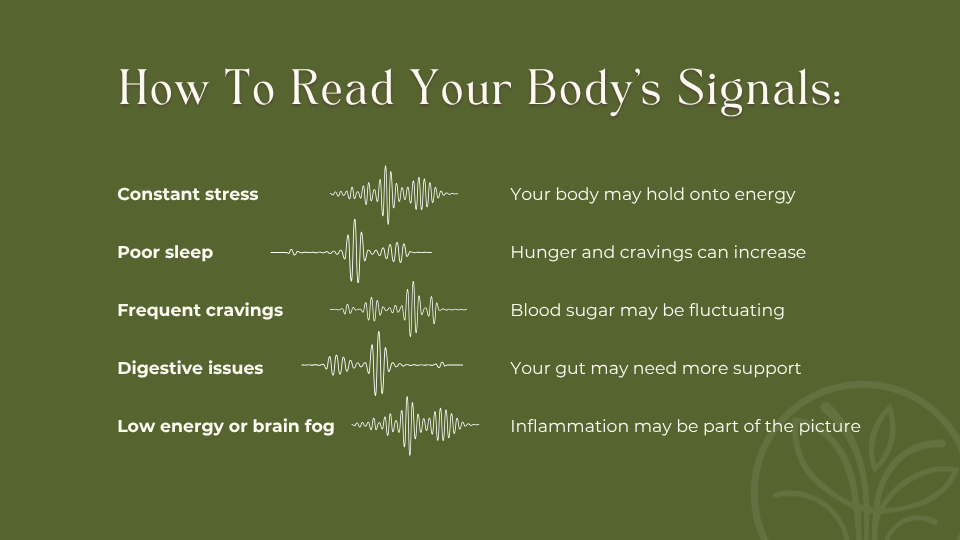
But stubborn weight is rarely about laziness or lack of willpower. It’s usually a whole-body story: stress, sleep, inflammation, blood sugar swings, cravings, gut health, hormones, and how well your body is actually using the nutrition you’re giving it.
So, what actually drives stubborn weight gain, and what can encourage a shift? (And stick with us, this is not a diet fad promo.)
Why weight can feel “stuck” (even when you’re trying)
1. Chronic stress tells your body to hold on
When stress is ongoing, your nervous system shifts into protection mode. From a biological standpoint, that means conserving energy, not releasing it.
Stress also amplifies cravings, disrupts sleep, and affects decision-making, which is why weight changes rarely happen in isolation.
Practical steps that can help:
Take 5 minutes of slow nasal breathing before meals to help downshift your nervous system and improve digestion.
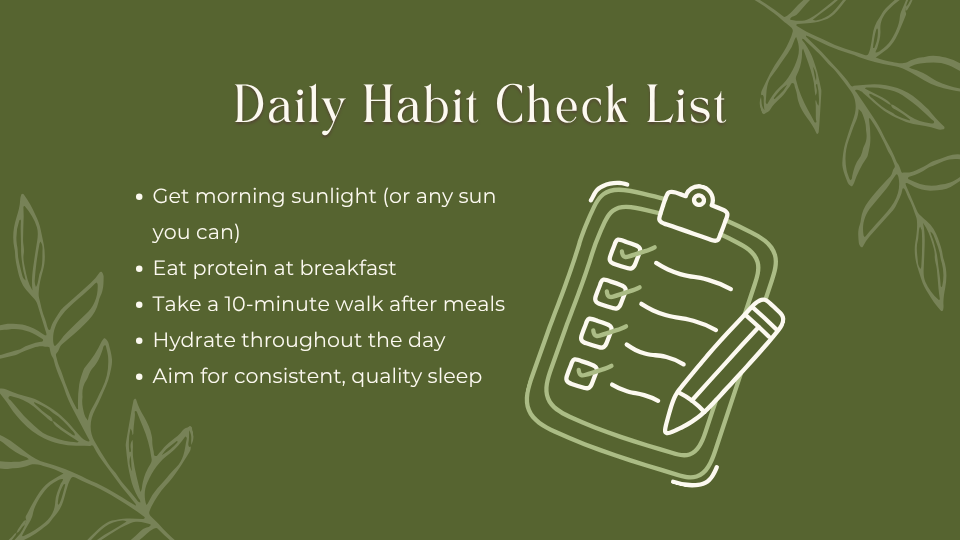
Go for a 10-minute walk after work to help regulate stress hormones, like cortisol.
Get early morning light exposure to help reset circadian rhythm and energy regulation.
Create a short wind-down routine at night without screens to help reinforce deeper sleep.
Small patterns matter more than intensity. Consistency is what signals safety to your system.
2. Poor sleep disrupts hunger and fullness signals
Sleep is not just rest. It is hormonal regulation.
When sleep is limited or fragmented, research shows the body tends to increase ghrelin (the hunger hormone) and decrease leptin (satiety hormone), which can increase appetite and cravings the next day.
Simple ways to regulate this:
Keep a consistent wake time most days of the week to stabilize circadian rhythm.
Reduce caffeine earlier in the day to improve sleep depth.
Dim lights 60 to 90 minutes before bed to promote melatonin production.
Keep your sleep environment cool, dark, and quiet to improve sleep continuity.
Keep phones out of the bedroom to reduce stimulation.
Even modest improvements in sleep duration and quality can significantly influence appetite regulation.
3. Movement supports metabolism, circulation, and recovery
Movement is not only about calorie burn.
It helps regulate circulation, contributes to lymphatic flow, and improves how nutrients are delivered and used throughout the body.
Think of movement less like “burning off food” and more like helping your body process what you’re already giving it.
What you can try:
Take a 10-minute walk after one meal each day to encourage glucose regulation.
Add two short movement breaks during the day, even 2 to 5 minutes each.
Use simple activities like stairs, stretching, or light bouncing to keep circulation moving.
Stand up and reset posture every hour, if you sit often.
The goal is not intensity. It is frequency.
4. Mindset influences follow-through more than most people realize
This is not about positive thinking.
It’s about the cycle that keeps many people stuck:try → struggle → self-criticism → quit → restart.
Shame is not a motivator. It typically leads to avoidance and inconsistency.
Here are some ideas:
Choose one change you can realistically repeat this week, even on busy days.
Replace “all or nothing” thinking with “What is the smallest consistent step?”
Track wins based on follow-through, not perfection.
Momentum is built through repetition, not intensity.
Why cravings can feel so hard to control
Many modern processed foods are engineered to be highly palatable, meaning they are designed to encourage repeated consumption.
Rapid spikes and drops in blood sugar can contribute to fatigue, irritability, and increased cravings, especially later in the day.
Try this:
Eat protein at breakfast to optimize energy and appetite regulation.
Pair carbohydrates with protein and fat to reduce blood sugar spikes.
Add fiber-rich foods, like vegetables, beans, and fruit to meals.
Reduce liquid sugar sources, like sweetened coffee drinks and sodas.
You do not need to eliminate carbohydrates. You are working toward stability, not restriction.
Inflammation: the background noise that makes everything harder
Inflammation is a normal immune process. It becomes a problem when it stays elevated due to ongoing stressors.
Chronic inflammation has been associated in research with fatigue, joint discomfort, brain fog, and altered appetite regulation.
When the body is under this kind of internal load, it often becomes less efficient at change and recovery.
Gut health and appetite signaling
The gut plays a major role in digestion, immune activity, and communication with the brain through the gut-brain axis.
Changes in gut bacteria composition have been associated with differences in cravings, satiety, and metabolic regulation in emerging research.
Try this:
Increase fiber gradually to help stabilize digestive adaptation.
Include a wider variety of plant foods across the week.
Add fermented foods like yogurt, kefir, or sauerkraut, if tolerated.
Stay well hydrated to support fiber function and digestion.
What to emphasize in your diet more often
Focus on nutrient-dense foods that lend to energy stability and inflammation balance:
Leafy green vegetables
Berries
Quality proteins like fish, poultry, or legumes
Cruciferous vegetables, like broccoli and cauliflower
Healthy fats, like olive oil and avocado
Spices, like turmeric and garlic
What to reduce when possible
Focus on reducing frequency, not perfection:
Added sugars
Ultra-processed packaged foods
Highly refined carbohydrates
Seed oil-heavy packaged foods
Artificial sweeteners (for some individuals, they may increase cravings)
A simple plate structure you can actually use
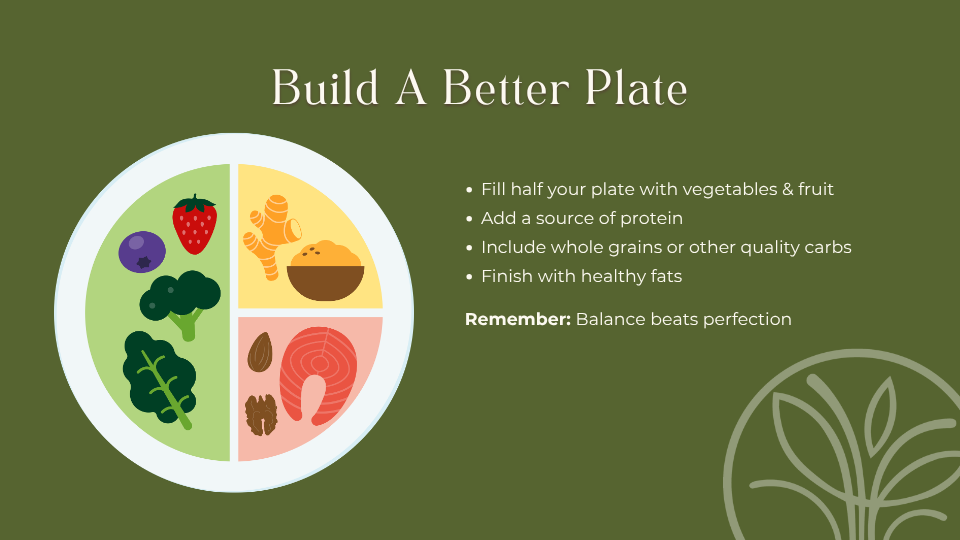
Fill half your plate with vegetables and fruit.
Add a protein source to help regulate satiety.
Include carbohydrates based on activity level and preference.
Add healthy fats for hormone and brain nourishment.
Whole grains can absolutely be part of a balanced approach. The focus is overall balance and consistency.
What is a simple weekly plan to support weight loss naturally?
Choose one:
Option 1: One nutrient-dense meal per day: Build one meal around protein, vegetables, and healthy fats without overthinking it.
Option 2: Improve hydration: Aim to gradually increase water intake throughout the day. Even small increases can influence energy and appetite regulation.
Option 3: Add post-meal movement: Take a 10-minute walk after one meal daily to stabilize glucose balance.
Option 4: Reduce decision fatigue: Prep a few simple meals or ingredients to make healthy choices easier during the week.
Where chiropractic care fits into the bigger picture
The nervous system plays a central role in how the body adapts to stress, digestion, sleep, and recovery. When the system is overwhelmed, it can become harder for the body to regulate itself efficiently.
Chiropractic care focuses on improving nervous system function alongside lifestyle changes, like sleep, movement, and nutrition. If things feel stuck, it often helps to zoom out and look at the system as a whole rather than any single factor in isolation.
If you are already under care, consistency matters more than perfection. Regular visits help support your system while you make changes in stress, sleep, movement, and nutrition. If you are not currently scheduled, staying on track with care can help you maintain momentum as you build healthier routines over time.