Takeaways from Think Well: How to Form Successful Habits
Building healthy habits that stick: what the science says and where to start
Most of us know what we should be doing. More movement. Better sleep. Less stress. Fewer processed foods. But knowing and doing are two entirely different things, and the gap between them is where habits live.
Building a healthier life isn't about overhauling everything at once. It's about understanding how habits actually form, and then using that knowledge to your advantage.
A habit, by definition, is a behavior that becomes more automatic because it's repeated in a consistent context. The more you repeat the same action in the same setting, the more your brain begins to cue that behavior without you having to think about it.
That's actually good news. It means that with the right repetition and the right context, almost any behavior can become second nature. The challenge is getting there.
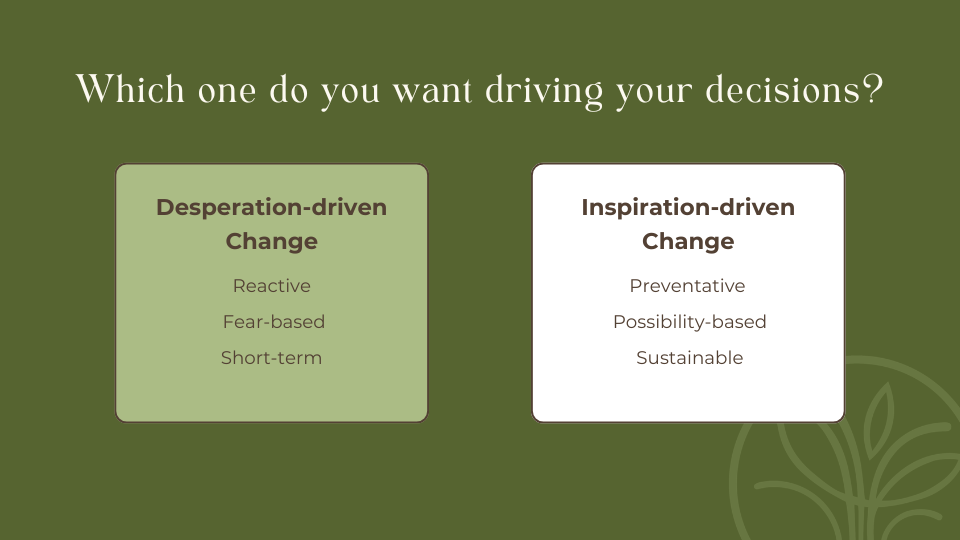
Don't wait for desperation to drive your decisions
There are really only two reasons people make significant changes: desperation or inspiration. Most people wait for the first one. A diagnosis. A crisis. A moment where they have no other choice.
But the most sustainable changes come from inspiration. From choosing to move toward something better before you're forced to.
This is exactly why preventative care matters. The habits you build today shape the health you experience tomorrow. And it's far easier to maintain a healthy system than to repair a broken one.
Forget the 21-day myth
You've probably heard that it takes 21 days to form a habit. The truth is there's no magic number. Research published in the European Journal of Social Psychology found that habit formation can range anywhere from 18 to 254 days depending on the person and the behavior.
What matters far more than the timeline is the combination of two things: consistency and repetition.
A habit practiced once a week for a full year can absolutely take hold. So can one practiced every single day for a shorter stretch. The variables are flexible, but you need at least one of them working in your favor. Something done regularly over time will always outperform a burst of motivated effort that fades after two weeks.
Start embarrassingly small and let the wins build
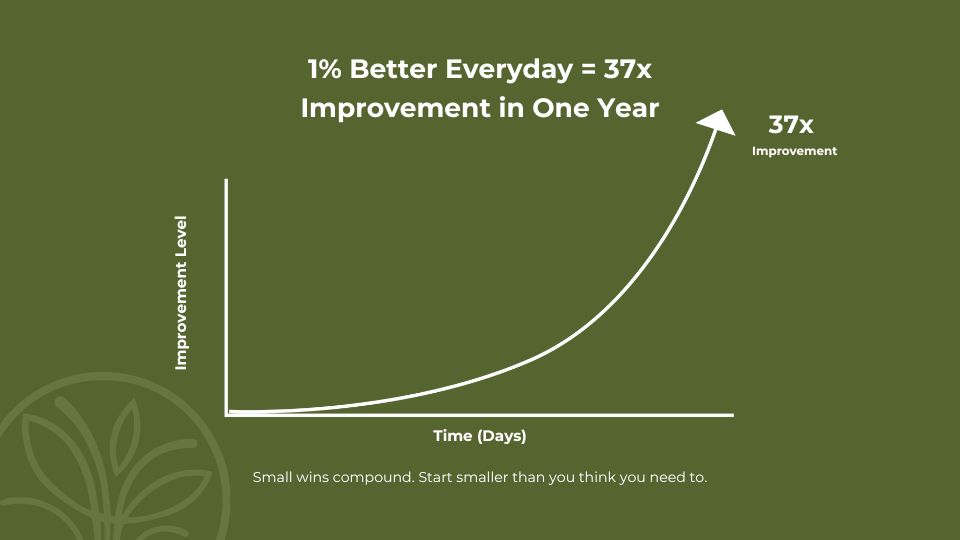
One of the most common habit-building mistakes is starting too big. The brain gets overwhelmed by large goals and shuts down. Small wins, on the other hand, produce dopamine, and dopamine reinforces the habit loop.
Think about it this way: if you improved just 1% every day for a year, you'd be 37 times better than where you started. That's not a motivational slogan. It's math.
One more word written. One more lap walked. One more glass of water. These micro-improvements compound into genuine transformation over time. The goal isn't perfection. The goal is progress your brain can recognize and reward.
Three tools that make habits feel almost automatic
These three approaches, drawn from James Clear's Atomic Habits, are among the most practical you can apply starting today.
Stacking means attaching a new habit to one you already have. You're not adding time to your day. You're piggybacking on an existing routine. Practice balancing on one leg while you brush your teeth, for example. You're already brushing your teeth. The new habit just comes along for the ride. The same logic applies to journaling with your morning coffee or stretching while you wait for something to heat up.
Batching is about putting your habits on a schedule and keeping them there. If you know you go to a fitness class every Monday and Thursday, that rhythm becomes automatic. You don't have to decide whether to go. The decision is already made. Scheduling removes the daily negotiation your brain would otherwise have with itself.
Tracking works because what gets measured changes. When you can see your progress, even a simple checkmark on a calendar, it creates accountability and feeds the small-win cycle that keeps you going.
Together, these three tools shift habit-building from willpower to systems. And systems outlast motivation every time.
Done beats perfect, every single time
One of the most important mindset shifts in habit formation is this: done is better than perfect.
You told yourself you'd walk today but only have five minutes? Walk. You planned to meditate for twenty minutes but only managed two? Meditate. The act of showing up, even imperfectly, tells your brain that this is who you are now.
Research suggests it may only take one to two weeks of broken routine for a developing habit to start unraveling. Muscle begins to atrophy in about two weeks without use, and behavioral patterns follow a similar principle.
This doesn't mean you have to be rigid. It means that when life throws off your routine (and it will), you reset and keep going. Non-negotiable doesn't mean inflexible. It means you find a way.
Balance is a habit worth building every single day
Here's one habit that deserves its own spotlight: balance.
As we age, most people stop physically challenging themselves the way they did as kids. We stop playing. We stop testing our limits. And gradually, without even noticing, our ability to balance diminishes, not just because of age, but because of disuse.
The British Journal of Sports Medicine has linked poor balance in midlife to increased risk of falls and early mortality. After age 60, a single fall can have cascading consequences for health and quality of life.
The fix is surprisingly simple. Stand on one leg while you brush your teeth. Challenge yourself for 30 seconds at a time. It costs you nothing and builds a foundation that protects a lot.
Try this tonight: one honest list
Before you go to sleep, do a brain dump. Write down every habit you'd like to build or change. Then rate each one: a 1 for your highest priorities, a 2 for important but secondary, and a 3 for everything else.
Look at your ones and choose just one to focus on for the next seven days.
Seven days. Non-negotiable. Stack it, batch it, track it.
Chiropractic care works better when your habits do too
The habits you build around your health, including keeping up with your chiropractic care, are all part of the same picture. Regular adjustments work best when your body isn't fighting against inflammation, poor sleep, or chronic stress. Each healthy habit supports the others, and your care here is designed to work alongside all of it.
If your next appointment isn't on the calendar yet, that's a great place to start. (You can schedule that easily via our website!) We're here to support not just your spine, but your whole approach to living well, one habit at a time