Why do you crave sugar, salt, and carbs, and what actually helps?
That 3 pm chocolate itch or the pull toward chips at the end of a long day isn't a flaw in your discipline. It's your body sending you information.
Once you understand what's actually driving a craving, whether it's blood sugar, stress, habit, or a mix of all three, you can respond in a way that works with your body instead of fighting it. Here's what's behind your cravings and what to do about them.
What your cravings are actually telling you
A food craving isn't a lack of willpower. It's a signal.
An intense desire for a specific food almost always falls into one of three categories: sweet, salty, or fatty. These aren't random preferences. Our bodies evolved to seek out these qualities because they once meant essential fuel for survival.
The catch is that today's food environment puts all three within arm's reach, in nearly unlimited quantities, at any hour of the day. That combination is what makes balance so hard to hold onto.
Cravings are rarely purely physical or purely psychological. They're usually both at once, which is exactly what makes them so persistent.
Why blood sugar dips fuel your sweet tooth
One of the strongest drivers of sweet and carb cravings is blood sugar. When it drops, your body looks for the fastest way to bring it back up, and sugar is the quickest fix around.
High-fructose corn syrup, found in most sodas and processed drinks, moves into your bloodstream even faster than raw sugar. It crosses the blood-brain barrier in a way that's been compared to alcohol. Fruit, by contrast, contains fiber that slows sugar absorption, so it doesn't create the same spike.
Your brain notices that rapid spike and files it away as an efficient energy source. That memory is what turns into a craving later on.
Skipping meals or going long stretches without eating sets the same pattern in motion. Blood sugar dips gradually throughout the day, and by the time you're home in the evening, your body is primed to reach for whatever's fastest, which is rarely the most nourishing option on hand.
Why emotions and habits drive cravings just as much as biology
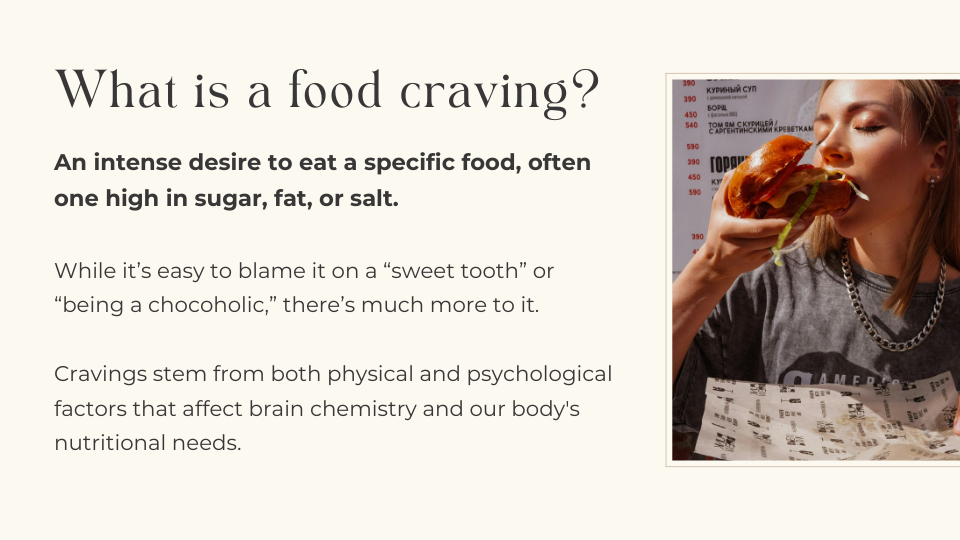
The psychological side of cravings is just as real as the physical one. Stress, memory, emotion, and routine all play a role.
Think about reaching for ice cream after a hard day. It's rarely about hunger. It's that your brain has learned to link that food with relief and decompression. Repeat the pattern enough times, and your brain starts expecting the same reward at roughly the same time each day, almost like clockwork.
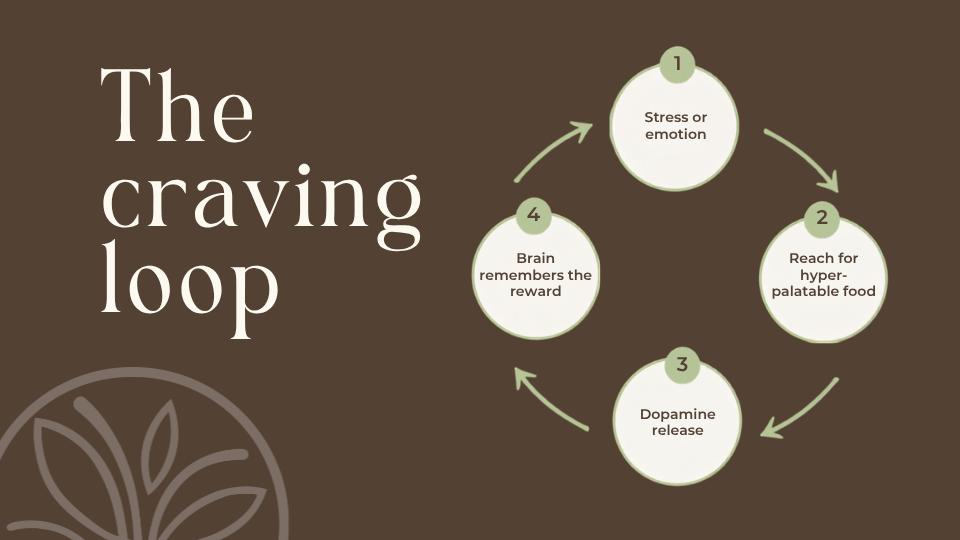
There's a neurochemical piece to this too. Hyper-palatable foods, meaning those that combine sweetness, saltiness, and richness, trigger a stronger dopamine release in the brain's reward centers than whole foods typically do. Research on food reward suggests these engineered combinations, things like fat paired with sodium, or fat paired with simple sugars, create a more intense eating experience than the same ingredients would on their own, activating reward pathways in a way whole foods typically don't.
The pleasure from that dopamine hit is short-lived, but the brain remembers it well. That's the cycle that keeps the craving loop spinning.
What to do in the moment a craving hits
Here's the good news: most cravings don't stick around as long as they feel like they will.
Research on craving patterns generally puts the window at somewhere between 5 and 30 minutes before intensity naturally fades. If you can create even a small gap between the craving and your response, you give your brain room to reset, similar to letting a wave rise, crest, and roll back out instead of trying to fight it head-on.
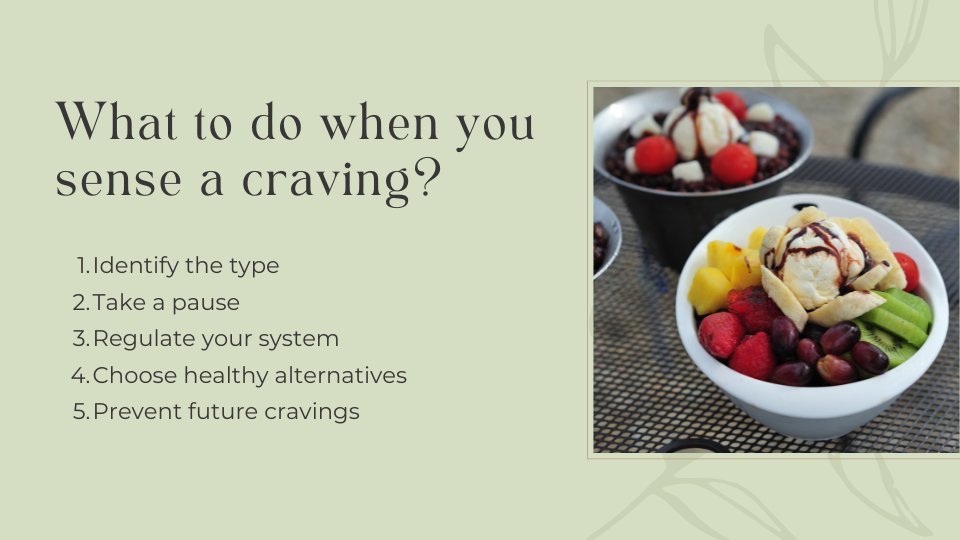
A few steps to work through when a craving hits:
Name what kind of craving it is. Ask yourself honestly whether it's physical hunger or something stress- or emotion-driven, since the right response depends on which one you're dealing with.
Do a short round of breathwork or gentle stretching. This helps regulate your nervous system, which is often what's actually dysregulated in the moment, not your stomach.
Drink a glass of water. Dehydration gets mistaken for hunger more often than you'd think, and plenty of people notice a real difference just from staying better hydrated throughout the day.
Give it five minutes if you can. Tell yourself you'll revisit the craving after that short wait. More often than not, the urgency has already started to fade by then.
Reach for a healthier option if you're still genuinely hungry. That's where a few smart swaps come in handy.
Smarter swaps for sweet, salty, and carb cravings
Trying to eliminate cravings entirely by going all or nothing tends to backfire. Your brain's reward system wants to feel acknowledged, not shut out completely. Instead of white-knuckling your way through a craving, it usually works better to redirect it toward something that still satisfies but supports your health.
For sweet cravings:
Reach for dark chocolate with a lower sugar content. Chocolate cravings are frequently linked to a magnesium shortfall, so getting around 300mg of magnesium daily is worth considering if this is a recurring craving for you.
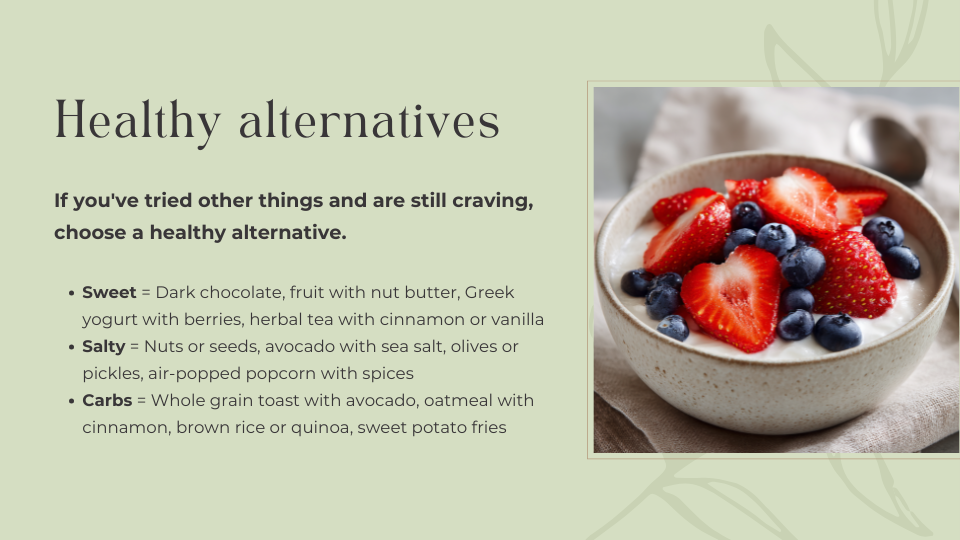
Try fruit with nut butter, Greek yogurt with berries, or a warm herbal tea with cinnamon or vanilla. These give you natural sweetness along with fiber or protein, which helps slow the sugar hit your brain is chasing.
For salty cravings:
Snack on nuts and seeds, avocado with a pinch of good-quality salt, olives, or pickles. Salt cravings can point to a mineral deficiency or to adrenal glands that are working overtime from chronic stress.
Choose Celtic sea salt when you do add salt to food, since it carries more trace minerals than standard table salt.
For carb cravings:
Choose whole grains, sweet potatoes, brown rice, or quinoa instead of refined carbs. These options come with more fiber, which slows how quickly sugar enters your bloodstream and helps blood sugar stay steadier.
Add cinnamon to meals when you can. It's a simple, practical way to support healthy blood sugar regulation without much extra effort.
Daily habits that keep cravings from creeping in
The best craving management happens before a craving ever shows up. A few habits worth building into your routine:
Eat regular meals throughout the day. Smaller, balanced meals spaced a few hours apart tend to work better for most people than long stretches with nothing in between.
Prioritize protein, plant-based fiber, and healthy fats at each meal. These keep blood sugar steadier and take the edge off cravings before they build momentum.
Drink enough water and get consistent sleep. Both dehydration and poor sleep are well-established triggers for increased hunger and stronger cravings.
Move your body, get some sunlight, and manage stress where you can. Exercise, meditation, music, and time with people you care about all help regulate your nervous system, and a nervous system that's already calm has less need to reach for sugar or processed food as a quick fix.
Keep tempting foods out of easy reach at home when possible. Your environment shapes your choices more than willpower ever will, so setting it up in your favor does a lot of the work for you.
Our office also carries specific supplements that can support cravings in a regulated, non-pharmaceutical way if you'd like extra support beyond food and lifestyle changes.
Start with one small change
You don't need a full lifestyle overhaul to make progress here. Drink an extra glass of water tomorrow. Add a snack between meals. Try five minutes of breathwork before reaching for something sweet. Small, consistent shifts add up over time.
Managing cravings isn't about restriction or deprivation. It's about understanding what your body is signaling and giving it what it actually needs. Nutrition and chiropractic care work together in this picture too, since inflammation affects how well your body holds an adjustment, and the foods you eat play a direct role in that inflammation.
If you haven’t already, make sure your next appointment is on the calendar. These conversations about whole-body health are ones we look forward to continuing with you, at every visit.