
Strategies from Science Simplified: How Often Should You Get Adjusted?
How often should you see a chiropractor, and does consistency actually make a difference?
If you’ve ever wondered, “Do I really need regular adjustments if I’m not in pain?”, you’re not alone.
Most people don’t ask that question when they’re feeling great. They ask it when their back “goes out,” when headaches start creeping in again, when they feel stiff after sitting too long, or when stress has been piling up for weeks and their body finally waves the white flag.
Here’s the thing: chiropractic isn’t just about chasing pain. It’s about supporting how your body functions, especially your nervous system, so you can adapt better to everyday life.
The nervous system is the “master controller”
Your nervous system runs the show.
Central nervous system: brain + spinal cord
Peripheral nervous system: nerves that branch out from your spine to the rest of your body (all the way to your fingers, toes, and organs!)
Your brain constantly gathers information from your body, processes it, and sends instructions back out. That’s how you move, digest food, regulate hormones, respond to stress, heal, and stay balanced.
And this leads to one of the most important ideas from the workshop:
Health is your ability to adapt.
Life is full of stressors. Some are obvious. Some are sneaky. Either way, your body is always adapting. The smoother the communication in your nervous system, the better your body can handle those stressors.
So, what gets in the way? (A simple way to think about subluxation)
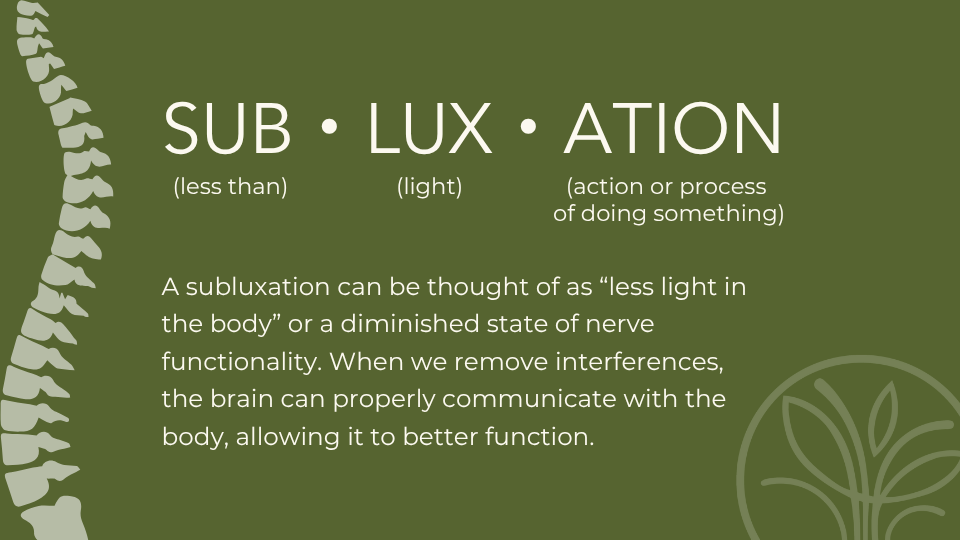
Chiropractic often uses the term subluxation to describe a situation where the spine isn’t moving or aligning well, and that can interfere with how the nervous system communicates.
You can picture it like this:
Your brain is the Wi-Fi router.
Your body is full of devices trying to stay connected.
A spinal restriction is like static on the line or a weak signal.
Sometimes this shows up as pain or tension. But sometimes it’s quiet, until your body reaches a breaking point.
That’s why waiting until something hurts isn’t always the best strategy.
The “last straw” effect: why your back didn’t really go out from tying your shoe
A classic story: You’ve been stressed, sitting weird, lifting kids, working long hours, sleeping poorly, and then you bend down to tie your shoe and bam, your back “goes out.”
It’s rarely just the shoe.
It’s more like the camel’s back metaphor: stress adds up “straw by straw,” and eventually one small thing is the last straw.
Pain can be your body’s way of saying: “Hey… I’ve been compensating for a while. I can’t adapt like I used to.”
So, the better question isn’t only: “How often am I in pain?”
It’s: “How often am I under stress?”
The 3 big categories of stress that affect your spine (and your nervous system)
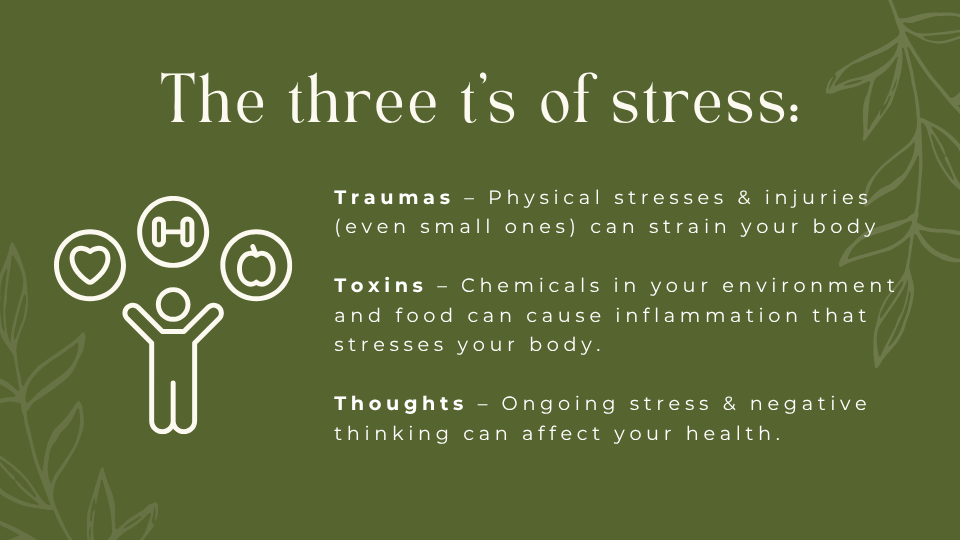
Stress can be grouped into three simple categories:
1) Traumas (physical stress)
This can include:
Old injuries (even from years ago)
Micro-traumas (repetitive strain, desk posture, scrolling posture)
Lifting, bending, twisting, workouts, sports
Weak postural strength and endurance
2) Toxins (chemical/physical environment stress)
Think:
Highly processed foods, excess sugar
Chemical exposure (some avoidable, some not)
Water/food/air pollutants
3) Thoughts (mental/emotional stress)
This might look like:
Chronic stress
Anxiety and tension patterns
Poor sleep
A nervous system that rarely gets to “rest and digest”
All of these can impact how the body holds tension, how you move, and how well you recover.
Why “feeling better” isn’t the same as “functioning better”
This is a big one.
Pain is important, but pain isn’t a perfect “dashboard light.” You can feel okay and still be stuck in unhealthy movement patterns, compensation, or reduced spinal mobility.
That’s why a proactive routine matters.
If we only respond when something hurts, we may be reacting late in the game, after stress has already been stacking for a long time.
A helpful comparison: Your spine needs “maintenance” too
Most of us brush our teeth daily, even when they don’t hurt.
Why? Because you’re not waiting for a cavity to start brushing. You’re preventing the buildup.
The workshop compared that to spinal health in a really practical way:
Plaque on teeth builds up gradually.
Wear and tear in the spine can build up gradually too.
Daily habits and regular check-ins help reduce long-term breakdown.
So, ask yourself:
Are you “flossing your spine” with daily movement?
Are you moving through full ranges of motion?
Are you doing stretches or rehab exercises consistently?
Even if you’re doing everything right, life still throws stress at you. That’s where chiropractic adjustments fit into the bigger picture: restoring motion, improving alignment, and supporting clearer nervous system communication.
Why do people need more frequent care at the beginning?
If your body has been compensating for years (or decades), it doesn’t instantly “unlearn” those patterns.
Your muscles, ligaments, and nervous system have memory. They like what’s familiar, even if what’s familiar isn’t ideal.
That’s why early care is often more frequent: it gives your body repeated input and support while it starts building healthier patterns.
And yes, some people feel sore at first. That can happen when your body starts using muscles and movement pathways it hasn’t used well in a long time. (Important note: sharp or unusual pain should always be communicated to the office so your care can be adjusted appropriately.)
What does research say about adjustment frequency?
The workshop highlighted a few key research-based insights in simple terms:
Regular care can mean fewer “pain episodes” and less reactive care
A study referenced from Sweden (2018) discussed patterns where people who received regular chiropractic care tended to experience fewer days of pain per year compared to people who only sought care when pain hit.
The practical takeaway:When people only come in once they hurt, they often end up needing a lot of visits anyway because the issue has had time to build.
In early stages, more frequent care can lead to better longer-term outcomes
A separate study referenced in the workshop (from the U.S.) suggested that more frequent adjustments early on were associated with better results that lasted longer.
The practical takeaway:If the goal is to change function (not just quiet symptoms), your body often needs consistency at the start.
The “brain training” piece: neuroplasticity and repetition
Here’s a science word that actually matters:
Neuroplasticity = your brain’s ability to change
Your nervous system can learn new patterns. It can also reinforce old ones. It all depends on the input it’s getting.
Getting adjusted is a form of input: it encourages healthier motion and alignment patterns, and your brain responds to that.
But just like learning piano or building strength in the gym, it takes repetition.
You don’t build muscle from one rep.
You don’t learn an instrument from one lesson.
Your body doesn’t shift long-term movement patterns from one adjustment.
Consistency wins because it gives your body the repeated signals it needs to adapt.
So… how often should you get adjusted?
There’s no one-size-fits-all schedule, but the workshop offered a clear framework you can understand.
A helpful guideline
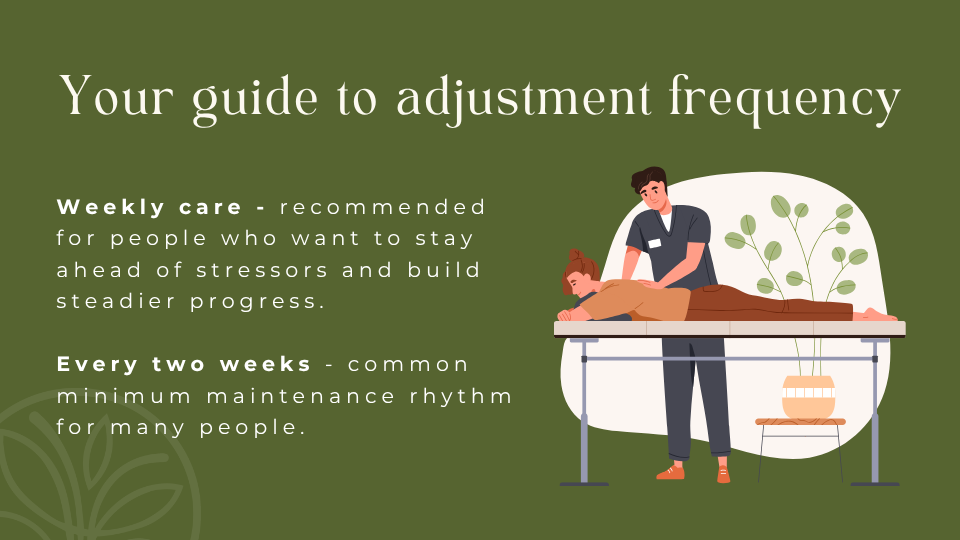
Weekly care is often recommended for people who want to stay ahead of stressors and build steadier progress, especially if life is high-stress or your body has been in patterns for a long time.
Every two weeks was shared as a common minimum maintenance rhythm for many people.
Why does that matter? Because the workshop noted that once a restriction pattern sets in, there may be a window before the body starts reinforcing it more deeply (even on a micro level).
And of course, your specific plan should be based on your exam findings, your goals, and what your body is doing.
But if you’ve been wondering whether consistency really matters: yes. It matters a lot.
What you can do at home to support your results (simple, actionable steps)
Adjustments work best when they’re paired with daily support. Here are the big “home habits” mentioned in the workshop, translated into doable steps:
1) Move every day.
You don’t need a perfect workout plan. You need motion.
Walk.
Stretch.
Move your spine through gentle ranges of motion.
Use your home rehab tools as recommended.
2) Practice stress downshifts.
Even a few minutes can help your nervous system shift gears.
Deep breathing
Short meditations
Starting your day with intention instead of chaos.
Check out our Tactics & Journal Prompts for Stress.
3) Hydrate like it matters (because it does).
Your body is largely water, and joints like lubrication. Don’t underestimate how much better your body feels when you’re consistently hydrated.
4) Reduce inflammation-supporting triggers.
Nobody’s perfect here. Just aim for “better most days.”
Cut back on excess sugar.
Reduce highly processed foods.
Focus on nutrient-dense meals.
5) Respect posture.
Posture affects how your spine and nervous system deal with gravity all day long. Small improvements add up:
Phone up, not down
Support your lower back when sitting.
Take posture breaks.
6) Protect your sleep.
Sleep is when your body repairs, restores, and resets. If sleep is off, healing is harder (period!).
☞ Learn more about improving your sleep from one of our recent blogs here.
The big message: be proactive, not reactive
If you only come in when you’re hurting, you’re playing defense.
And while we can absolutely help in those moments, most people do better long-term when they treat chiropractic like a routine (similar to dental care, exercise, or oil changes for your car).
Your body works hard for you. It deserves regular support.
Ready for your next step?
If you’re already under care: keep your next appointment. Consistency is what helps your body build stability over time, not just quick relief.
If you’ve been meaning to get back in (or you’re new and not sure where to start): schedule your next visit, and let’s take a look at what your body’s doing before you hit the “last straw” moment.
Your nervous system is the master controller. Let’s help it do its job well. 😊