Strategies from Move Well: Posture Cushion Tools for Better Posture and Spinal Mobility
How does a posture cushion help posture, back stiffness, and long hours of sitting?
A lot of people notice the same thing: the more time they spend sitting, the more their body starts to feel tight, stiff, and “stuck.” It’s not just about posture looking off; it’s about how the body adapts to long periods of stillness.
We often talk about how daily stressors like thoughts, toxins, and physical strain add up over time. When that’s layered with hours of sitting and limited movement, the body starts to show it through tension and reduced mobility.
The goal isn’t to eliminate sitting. It’s to balance it with better awareness, smarter tools, and more frequent movement.
Why Movement Matters More Than Most People Realize
The body is built for motion. When joints move, they stay more nourished, flexible, and responsive. When they don’t, things tend to tighten up and become less adaptable over time.
Even if your day includes several hours of sitting, your body benefits from short, consistent movement breaks to keep things from locking up.
Think of it like a well-used hinge on a door. Regular motion keeps it smooth, while long periods of stillness make it stiff.
How a Posture Cushion Supports Healthier Sitting
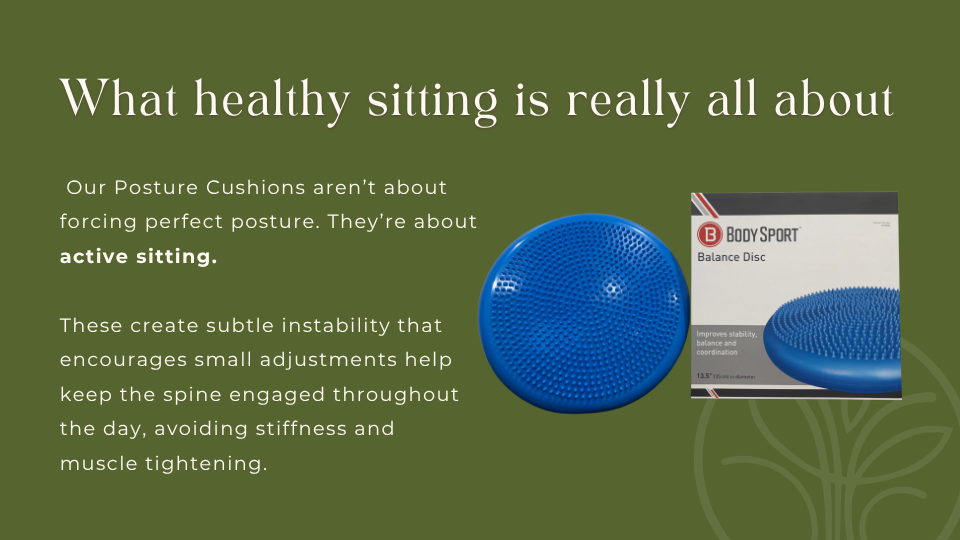
A posture cushion isn’t about forcing perfect posture. It’s about gently encouraging your body to stay active while you sit.
Instead of locking you into one position, it creates subtle instability that encourages small adjustments. Those tiny movements help keep the spine more engaged throughout the day.
It can also be used in a few different ways:
Place it on your chair to encourage active sitting, which helps reduce long periods of static pressure through the spine.
Use it as back support when you need a break from active sitting, giving your body a chance to reset.
Move it between home, work, or travel so your sitting environment stays more supportive wherever you are.
How to Start Using it Without Overdoing it
New tools work best when your body has time to adjust. Jumping in for long stretches right away can leave you feeling more sore than supported.
Start small and build gradually.
Start with short sessions: Use the cushion for about 20–30 minutes at a time so your body can adapt to the new positioning.
Alternate your setup: Switch between active sitting and regular chair support so your muscles don’t fatigue too quickly.
Pay attention to feedback: Notice how your body feels afterward, then adjust timing based on comfort and ease.
Simple Movement Ideas You Can Pair With Sitting Breaks
These small movements help reset the spine and keep circulation moving, especially during long work or screen sessions.
Sit tall and gently move through flexion and extension:
Sit upright, then slowly round and arch your back in a controlled motion. This helps the spine move through its natural range and keeps things from feeling stiff.Shift side to side through your hips:
While seated, gently lean your weight from one side to the other. This encourages balance through the pelvis and lower back, especially after long periods of stillness.Rotate gently through your upper body:
Keep your spine tall and turn slightly left and right. Think of it like gently untwisting tension that builds during focused work or screen time.
If anything feels sharp or uncomfortable, ease off and keep the movement smaller. The goal is ease, not intensity.
Building Consistency Without Overthinking It
The biggest shift usually doesn’t come from doing more; it comes from doing things more often in small doses.
Set simple reminders if needed. Even something as basic as noticing your posture when you sit down can start to build awareness over time.
Tools like a posture cushion help because they act as a visual and physical cue. Every time you sit, it’s a small reminder to check in with how your body is doing.
Where Chiropractic Care Fits Into the Bigger Picture
Chiropractic care focuses on how well your brain and body communicate through the spine and nervous system. When that connection is working well, your body is generally better able to adapt to daily stress and movement demands.
Tools like a posture cushion and simple movement strategies support that process by reducing long periods of stillness and encouraging more natural motion throughout the day.