
Lessons from: Move Well: How Well Are You Sleeping, Really?
Sleep is not passive rest. It is the most active recovery process your body has, and the quality of it shapes everything else about your health.
Most people think of sleep as the absence of activity. You close your eyes, your body shuts down, and you wake up feeling either good or bad. But what actually happens during those hours is far more complex, and far more important, than most of us realize.
Poor sleep isn't just inconvenient. It is a sign that something in the body needs attention, and it sets off a chain reaction that affects pain, mood, immunity, hormones, and the long-term health of your brain and spine.
Here is what the research says, and what you can start doing about it tonight (or technically, tomorrow morning).
Recognize everything your body is doing while you sleep
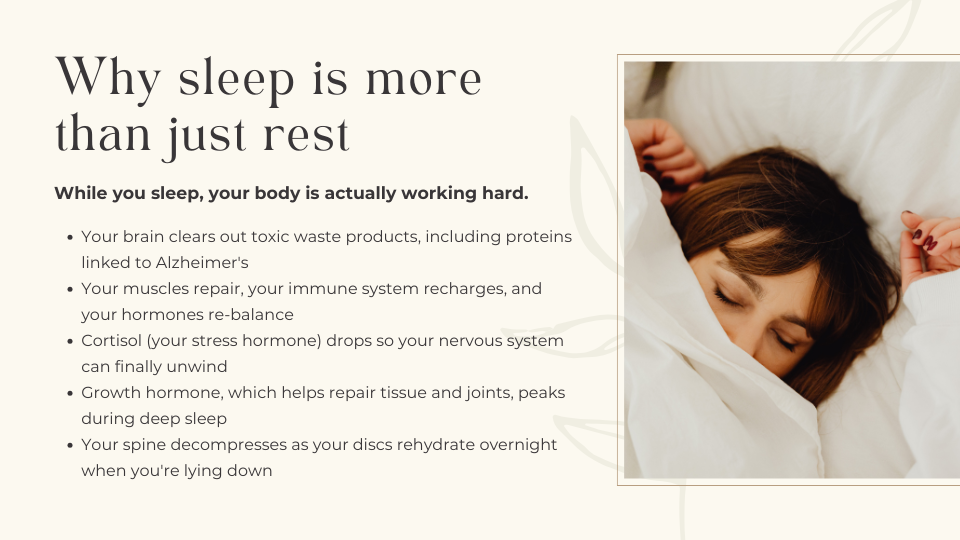
Sleep is when the body does its most critical repair work. During quality sleep, your brain clears out toxic waste products, including proteins linked to Alzheimer's disease. Your muscles repair. Your immune system recharges. Your hormones rebalance. Your liver, which processes the majority of your hormones, hits its peak activity in the middle of the night.
Cortisol, the body's primary stress hormone, is supposed to drop significantly during sleep so the nervous system can fully unwind. If you are not sleeping well, cortisol stays elevated and your body never gets that essential window of recovery.
Growth hormone, which is responsible for repairing tissue and joints, peaks during deep sleep. If you are a light sleeper or you are not reaching deep sleep stages consistently, your body is missing one of its most powerful healing cycles.
Your spine benefits too. The intervertebral discs that act as shock absorbers between your vertebrae rehydrate during sleep. That process depends on healthy spinal movement and adequate hydration. Without it, the discs gradually lose height over time.
Break the cycle between pain and poor sleep
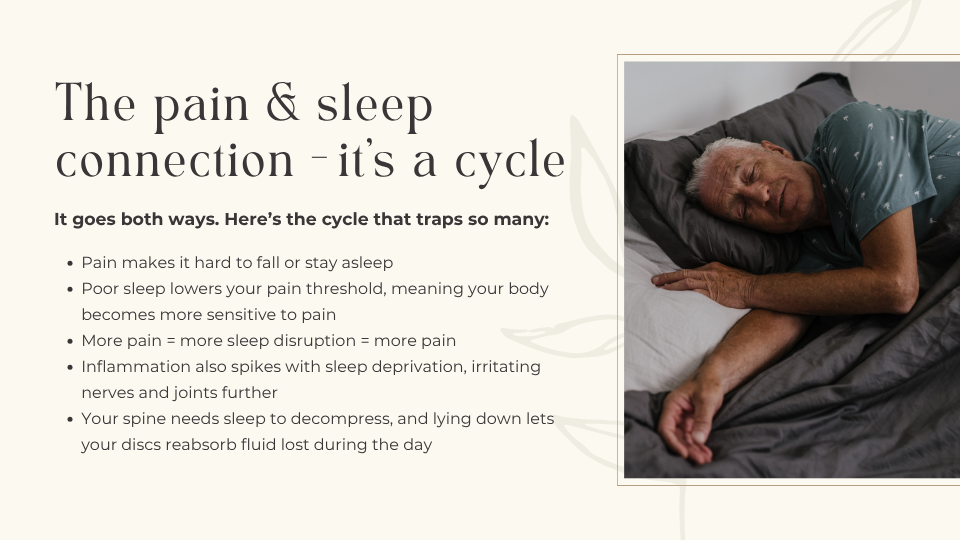
If you are waking up in pain, or waking up more sensitive to pain than when you went to bed, you are caught in one of the most common and most frustrating patterns in musculoskeletal health. Pain makes it hard to sleep. Poor sleep lowers your pain threshold, making you more sensitive to pain. That increased sensitivity makes sleep even harder. And the cycle continues.
Chronic pain is partly a brain phenomenon. The brain learns pain from a specific area of the body and continues to register it even after that tissue has healed. Deep sleep is one of the mechanisms that helps the brain reset those pain patterns. Without it, the pattern reinforces itself.
Inflammation also spikes with sleep deprivation. A simple at-home test: when you wake up in the morning, try to close your hand into a fist. If it feels stiff, swollen, or difficult, that is a sign of elevated inflammation in the body. Stiffness upon waking is not just a sign of aging. It is information.
Research shows that 67% of chronic pain patients report significant sleep problems, and people whose sleep is disrupted by pain are three times more likely to develop depression. This is the whole-body connection that holistic care is built around. Your physical state affects your mental state, and your mental state feeds back into your physical experience.
Understand how your nervous system controls your sleep quality
There are two sides to your nervous system. The sympathetic side governs the fight-or-flight response. The parasympathetic side governs rest and recovery. When the sympathetic system is dominant, as it is for most people managing chronic stress, your body stays in a state of tension and alertness. Cortisol remains elevated. You feel wired but tired. Deep, restorative sleep becomes harder to reach.
Chiropractic adjustments directly influence this balance. Research shows that adjustments lower cortisol levels, reduce spinal tension, and help shift the body toward the parasympathetic state it needs for quality sleep. Many patients notice they fall asleep faster and sleep more deeply following an adjustment. That is not coincidence. It is physiology.
One measurable marker of this is heart rate variability, or HRV. HRV reflects how efficiently the heart adapts to the body's changing needs. Higher HRV generally means the nervous system is more regulated and resilient. Lower HRV is associated with chronic stress and poor recovery. Devices like an Apple Watch, an Oura Ring, or similar wearables can track HRV and give you real data on how your body is recovering overnight.
Stop sleeping in positions that work against your spine
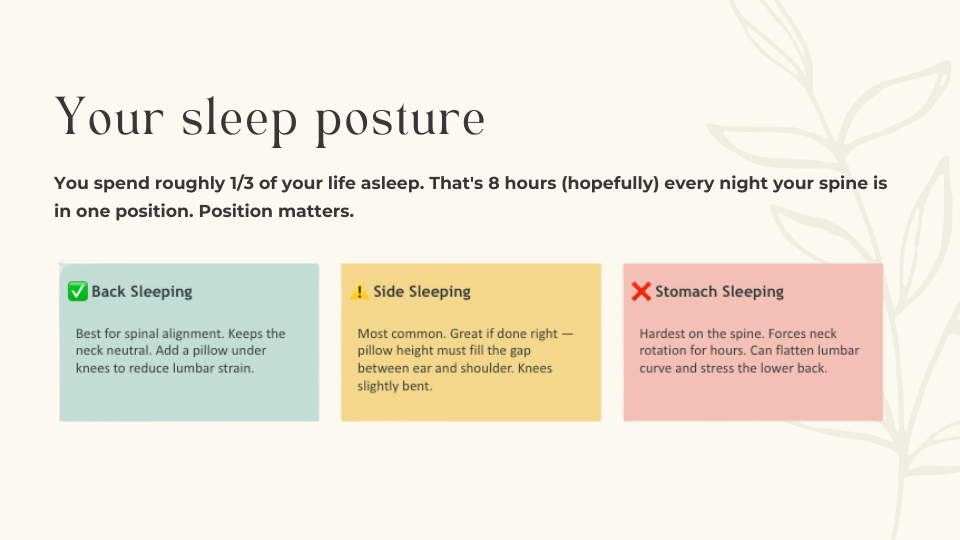
There are only three ways to sleep: on your back, on your side, or on your stomach. Each has different implications for spinal health.
Back sleeping is the most supportive position for spinal alignment. Placing a pillow under the knees reduces pressure on the lower back and keeps the spine from twisting or laterally flexing overnight. If you sleep on your back, your pillow should not be large or thick. A pillow that pushes your head forward disrupts the natural curve of the cervical spine, which research shows slows the connection between the brain and the rest of the body.
Side sleeping is acceptable when done correctly. The key is keeping the spine in a neutral, straight line. A pillow between the knees prevents the top hip from dropping forward and rotating the lumbar spine. Your head pillow should fill the space between your shoulder and your head so that your neck is neither tilting up nor dropping down.
Stomach sleeping is the position most likely to cause problems. It requires the head to be turned to one side for the entire night, placing constant rotational stress on the cervical spine. It also makes breathing harder, requiring the chest to lift against the mattress with every breath. If you are a stomach sleeper, the goal is not perfection overnight, but gradually training the body toward side sleeping using pillow placement to make that position more comfortable and sustainable.
Find the right pillow and mattress for your body
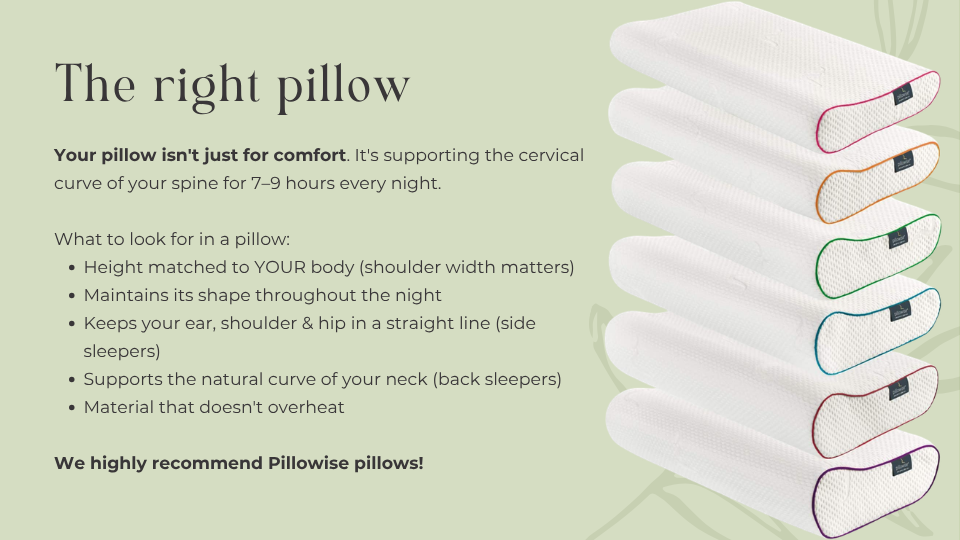
Your sleep environment is not separate from your health. It is part of it. An unsupportive pillow or a worn-out mattress can undo the benefits of an adjustment and keep your spine in a compromised position for six to eight hours every night.
When evaluating your pillow, a simple test tells you a lot: when you squish it flat, does it spring back? If not, it is likely no longer providing the support your neck needs. A good pillow should maintain the natural curve of the cervical spine whether you are on your back or your side. Pillowise pillows, available through the office, are fitted to your individual measurements including neck length and shoulder width, which removes the guesswork of ordering online. They are made from Dutch memory foam, hold their shape for approximately five years, and come with a warranty.
☞ Learn more about Sleep & Your Pillow here.
For mattresses, a general guideline is to replace any mattress older than seven years. Beds no longer last the ten to twenty years they once did, and the firmness and buoyancy needed to support your spine and hips deteriorate even when the mattress looks fine. Visible sagging, indentations where you sleep, frequent tossing and turning, and morning stiffness are all signs your mattress may no longer be doing its job.
Saatva mattresses are chiropractor-approved and available through a link on the HFC website. They offer multiple models, a quiz to help you identify the right fit, white-glove delivery including removal of your old mattress, and a one-year return window.
Build the habits that make quality sleep possible
Good sleep starts the night before. That might sound strange, but it means that the choices you make throughout the day directly shape how well you sleep that night.
A consistent sleep and wake time is one of the most powerful tools available. Your body operates on a circadian rhythm, and even a week of waking at the same time each day can produce noticeable shifts in energy and sleep quality. Aim for at least seven hours, and ideally closer to eight, with a minimum of five hours of uninterrupted sleep.
Keep your bedroom cool. Research points to a room temperature between 65 and 68 degrees as optimal for deep sleep and improved HRV. Reduce light and noise as much as possible. Your nervous system is sensitive to environmental stimulation, especially when it is already running at a high level.
Turn off screens at least 30 minutes before bed. Light from devices signals the brain that it is still daytime and suppresses melatonin production. Replace screen time with reading, journaling, or a short meditation practice. These activities activate the parasympathetic nervous system and create the conditions for a smoother transition into sleep.
Avoid large meals, alcohol, and caffeine in the hours before bed. Alcohol and high-sugar foods destabilize blood sugar overnight, which pulls the liver away from its hormonal processing work and often causes waking in the early morning hours. Caffeine is best kept for the morning, with a hard cutoff before noon if sleep is a concern.
Exercise regularly, preferably in the morning. Physical activity in the morning helps cortisol peak at the right time and decline steadily through the day, so the body is naturally ready to wind down by evening.
Start your sleep audit tonight
Before making any changes, spend three nights tracking your sleep.
Write down how many hours you spent in bed, how many you estimate you actually slept, how many times you woke up, and how you felt in the morning. Note your sleep position when you fall asleep and when you wake up. This simple audit gives you a starting point and helps identify the most likely areas for improvement.
Poor sleep is not a problem to push through. It is a signal your body is sending about its overall state of health. The goal is not just more hours but better quality, more restorative sleep that allows every system in the body to do the work it was designed to do overnight.
Your chiropractic care is a direct investment in that outcome. A regulated nervous system, a decompressed spine, and reduced spinal tension all contribute to the kind of sleep that actually heals.
If your next appointment is not already on the calendar, this is your reminder to get it scheduled. We are here to help you sleep better, move better, and feel better at every stage of the process.