
The holiday season is here, and a few simple habits can help you avoid the slide into inflammation and weight gain.
By this time of year, the cooler weather, cozy comfort foods, and shorter days have fully settled in. It’s also one of the easiest times of year to slide into habits that quietly work against your health.
But a few intentional shifts now can make a big difference.
Let’s walk through what actually matters when it comes to fueling your body for the rest of the season and into the holidays.
Know that supplements need the right building blocks to work
There's been a lot of buzz lately around peptides and other supplement trends promising to help the body repair and regenerate tissue. Here's the catch: even the most promising supplement needs raw materials to actually do its job.
Think of it like an old typewriter ribbon. If the ribbon runs out of ink, the letters stop showing up clearly on the page, no matter how well the machine works. Supplements function the same way. If your body doesn't have enough vitamin A, vitamin C, vitamin E, zinc, and other key nutrients, the supplement simply doesn't have what it needs to complete the job.
On top of that, your mitochondria (the energy-producing parts of every cell in your body) need to function well for any of this repair process to happen efficiently. If mitochondrial function is compromised, even a well-targeted supplement may only produce short-lived results.
Watch for the fall dip in vitamin D and movement
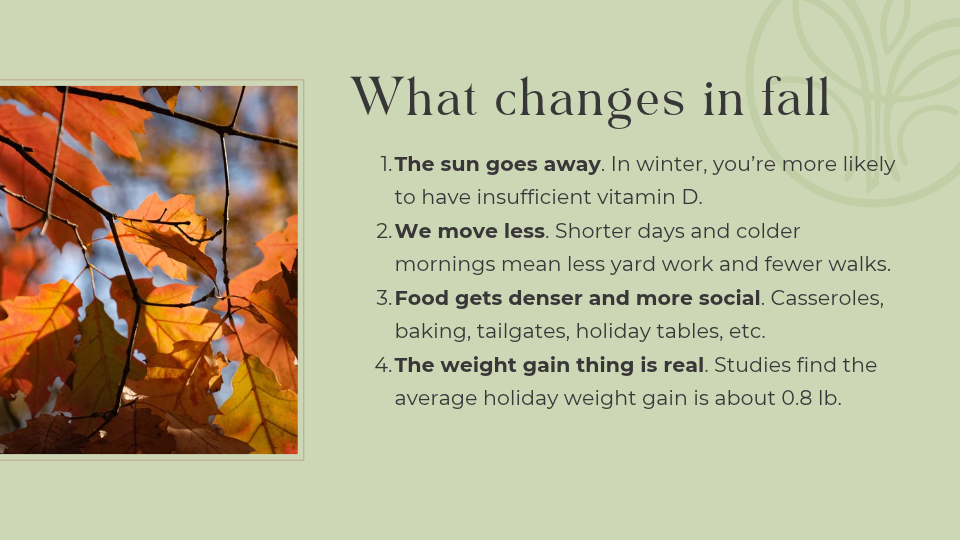
Now that the clocks have fallen back and daylight hours keep shrinking, two things tend to happen at once: vitamin D levels drop, and physical activity slows down. Cooler weather makes it tempting to stay inside, but both of these shifts can affect mitochondrial function and overall energy.
Vitamin D acts almost like a pro-hormone in the body, playing a role in far more than just bone health. Combined with less movement overall, this seasonal shift can leave you feeling more sluggish than usual if you're not paying attention to it.
Be mindful of holiday season calorie creep
Holiday gatherings are filling the calendar, and casseroles and baked goods are bound to fill our bellies. None of that needs to be avoided entirely, but it's worth recognizing that these foods often bring plenty of calories without much actual nutrition.
Even small, steady weight gain adds up over time. As little as ten extra pounds can add meaningful stress to your back and joints. A helpful mindset here: aim to eat well roughly five days out of seven, rather than aiming for perfection and then giving up entirely when it doesn't happen.
Choose foods with fewer "wrappers"
One of the simplest ways to eat cleaner is to ask a simple question: how many wrappers does this food go through before it reaches you?
A cereal box has a wrapper inside a box. An apple has none, even if it's bagged with a few of its friends. Single-ingredient foods like apples, tomatoes, celery, cucumbers, and kale don't need a nutrition label, because the food itself is the ingredient.
If your plate is mostly made up of foods without wrappers, you're likely eating pretty well.
Learn to read produce codes at the grocery store
Here's a helpful trick for identifying how your produce was grown. Look at the small code sticker:
A four-digit code starting with a 4 typically means the produce was conventionally grown.
A five-digit code starting with a 9 means it's organic.
A five-digit code starting with an 8 typically indicates it's been genetically modified.
This is especially worth knowing for foods like seedless watermelon, seedless cucumbers, or certain tomatoes, which often fall into the genetically modified category.
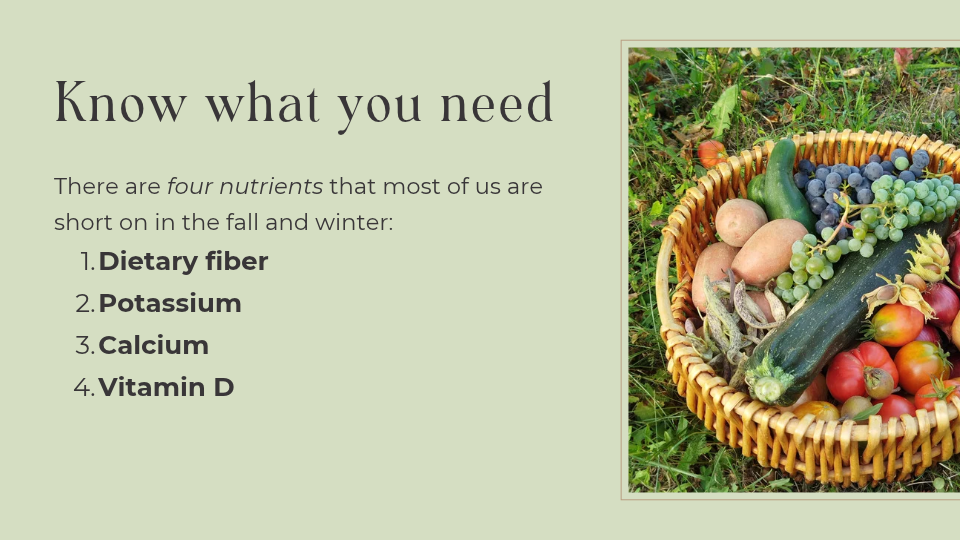
Prioritize fiber, and get it from real food
Fiber plays a major role in gut health, blood sugar regulation, and feeling full and satisfied after meals. Unfortunately, many people are told to reach for processed fiber supplements like psyllium husk, when whole fruits and vegetables offer far more benefit.
Fiber also naturally increases leptin (the hormone that signals fullness) while helping to manage ghrelin (the hormone that signals hunger). This is essentially the same mechanism that trendy weight-loss medications are designed to mimic, except fiber does it through real food, without the side effects.
Build a balanced plate each meal
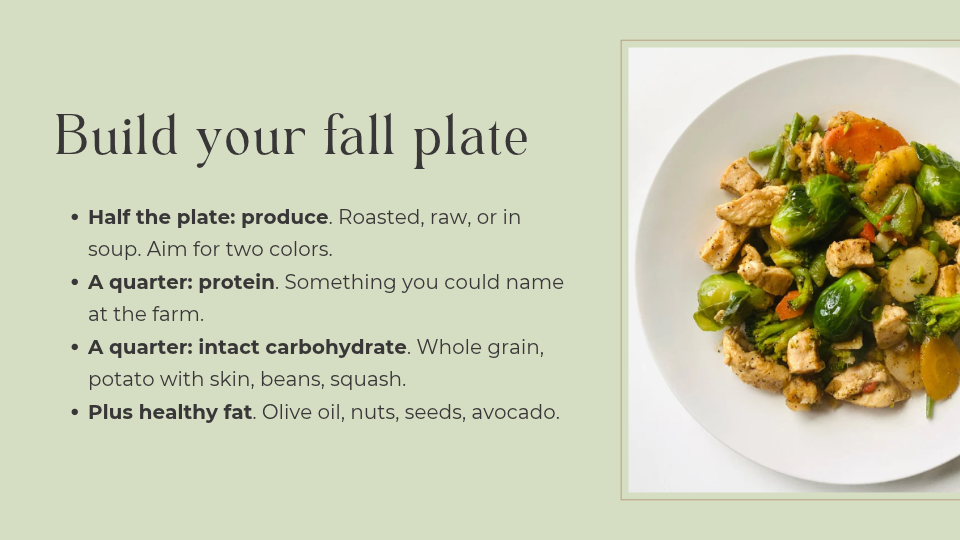
A simple way to structure your plate:
A good portion of vegetables
A protein serving roughly the size of a deck of cards
Additional fiber and nutrients from fruit, adjusted based on your activity level
Even fruit choices matter here. Bananas, for example, are a great source of potassium, but one banana actually counts as two servings of fruit and can spike blood sugar more than expected. Kiwi is another great option, offering magnesium and vitamin C without the same blood sugar impact.
Understand why fad diets rarely hold up long-term
Trendy diets like keto and carnivore can produce real short-term results, but they're difficult to sustain and often create new problems over time.
With ketogenic diets, for example, the body can end up overwhelming the gallbladder after extended periods on a very high-fat diet. With carnivore diets, it becomes difficult to get essential nutrients like fiber, vitamin D, and essential fatty acids, all of which your body needs, particularly for brain function.
That doesn't mean these approaches are inherently bad. It simply means they work best as a season, not a permanent lifestyle. If you try one, give it 6 to 9 months, pay attention to how your body responds, and be willing to adjust.
Eat with the seasons, and don't overthink it
One of the most underrated nutrition strategies is simply eating what's naturally in season. Seasonal produce tends to be fresher, more nutrient-dense, and better for your microbiome. There’s still plenty of time to enjoy root vegetables, squash, and other late-fall produce before winter sets in.
Frozen or canned produce can absolutely fill the gaps when fresh isn't available, especially heading into winter. The goal isn't perfection. It's variety and consistency, without creating so much stress around "eating right" that it becomes its own source of tension.
Plan ahead so you're not caught off guard
Life happens, and that's okay. The key is planning for it rather than abandoning good habits entirely when plans change.
Something as simple as spending 60-90 minutes prepping meals for the week can make a significant difference in how consistently you eat well.
As the saying goes, if you fail to plan, you plan to fail. A little preparation goes a long way in making healthy choices, even through the busy holiday season.
Your nutrition plays a major role in how your body repairs, recovers, and feels overall, and small, sustainable changes make a much bigger impact than chasing the next trending diet. If you have questions about your own nutrition plan as the seasons change, we're happy to help you figure out what actually works for your body.
And if it's been a while since your last visit, now's a great time to check in. Keep or schedule your next appointment, and let’s make sure your body has everything it needs heading into the holidays and winter.