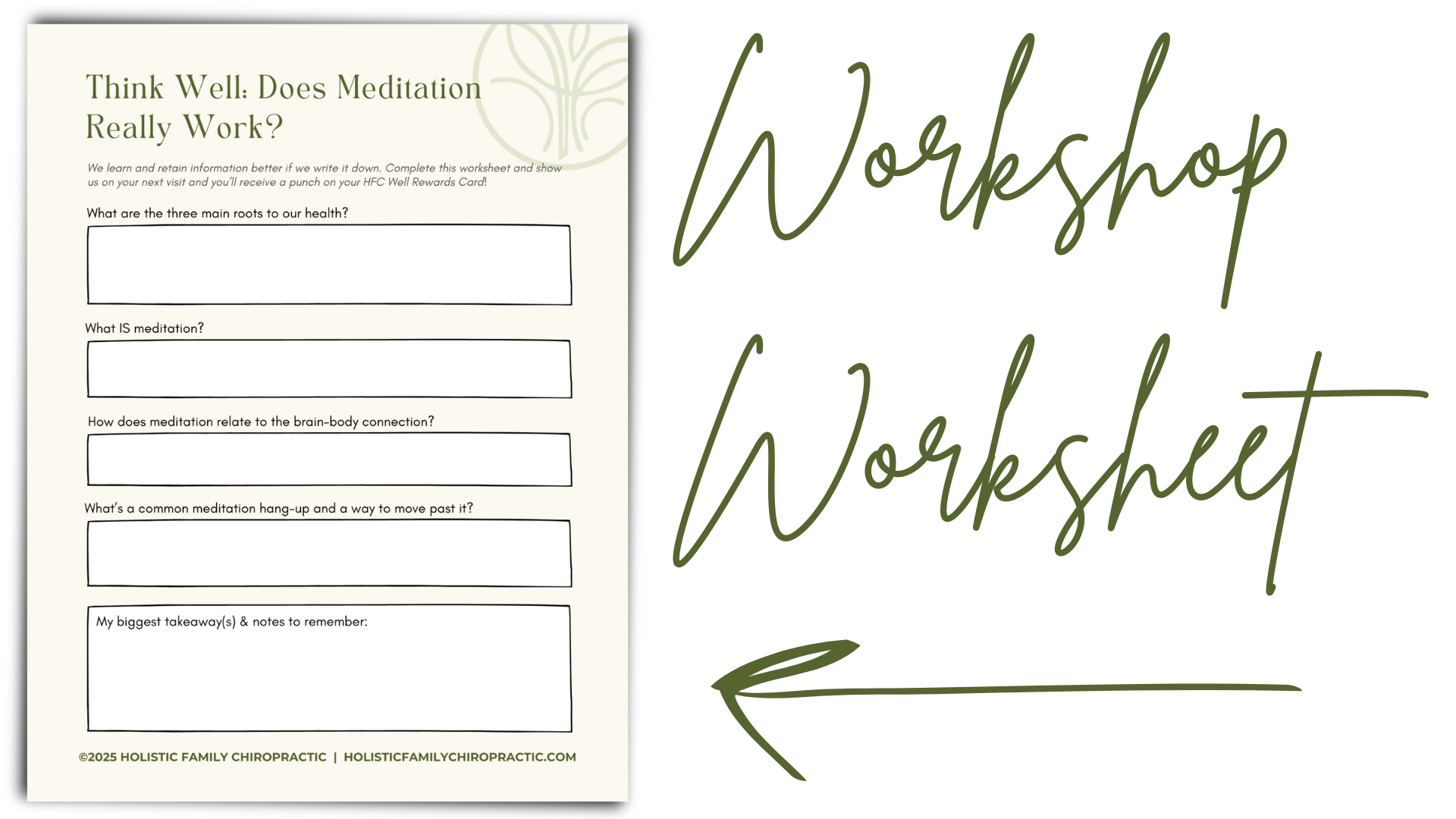
Takeaways from Think Well: Does Meditation Really Work?
How Mindfulness Supports Health and Wellness
Think Well: Does Meditation Really Work Workshop Worksheet
Ever wondered if meditation is just a trend, or if it truly holds the key to a healthier, more balanced life?
Meditation is more than sitting quietly; it’s a practical tool to calm the mind, reduce stress, and improve overall well-being. With the right approach, anyone can use meditation to support mental clarity, emotional resilience, and even physical health.
The Modern Dilemma: Stress and Nervous System Overload
In today’s fast-paced world, our nervous systems are constantly on overdrive. Phones, notifications, deadlines, and life’s everyday pressures bombard us with constant stimuli. Over time, this overstimulation disrupts natural rhythms, leading to tension, irritability, sleep disturbances, and even chronic pain.
Meditation provides a scientifically supported way to help the nervous system reset, restore balance, and promote relaxation in both body and mind.
Understanding the Roots of Health: Trauma, Thoughts, and Nutrition
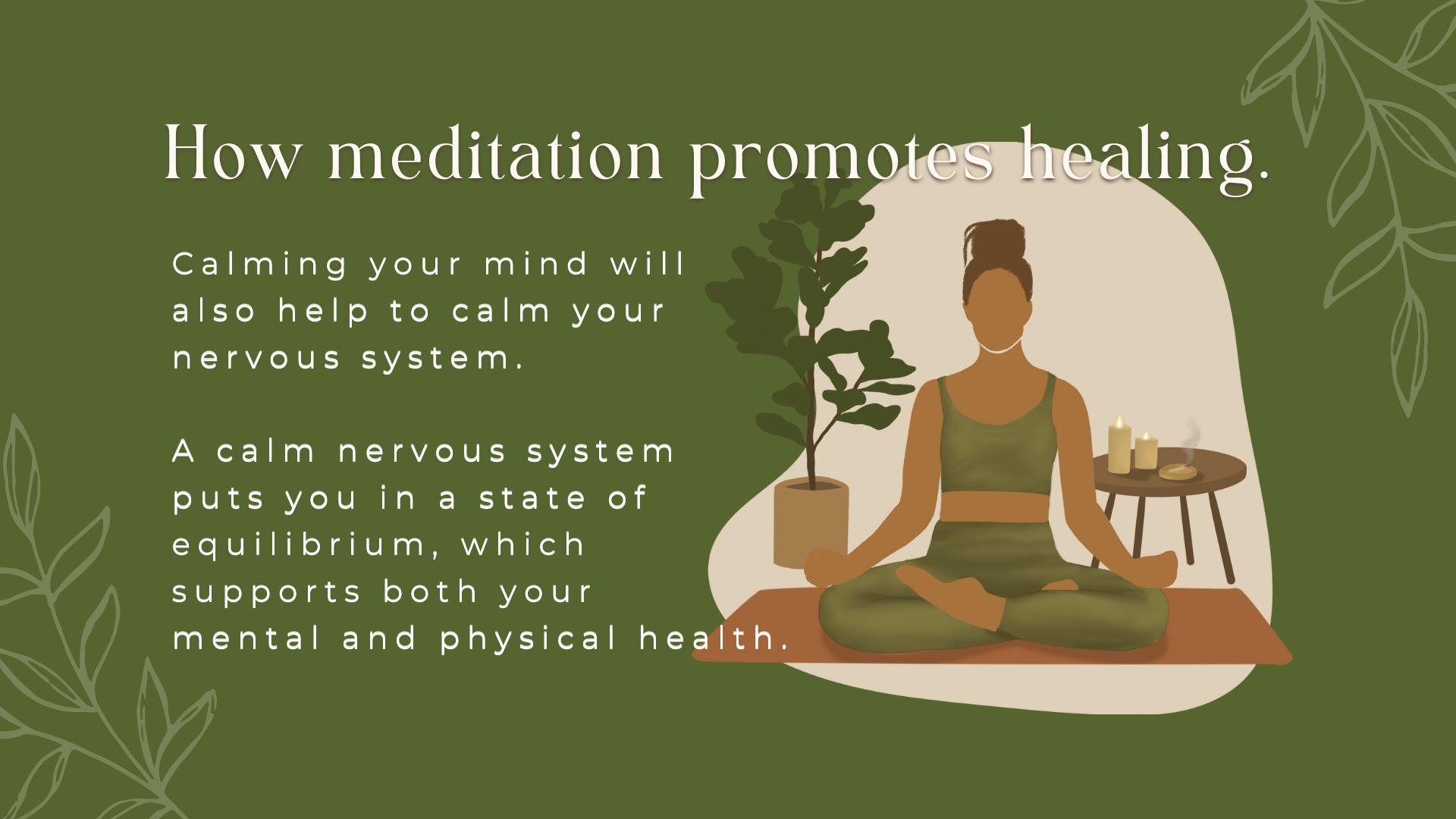
While chiropractic care often addresses physical trauma, meditation helps target the mind. Regular mindfulness practice allows the nervous system to calm, reduces mental chatter, and promotes a state of equilibrium, which supports both mental and physical healing.
The Science Behind Meditation: How Mindfulness Changes Your Brain
Meditation isn’t just a feel-good practice. It produces measurable changes in the body and brain. Research shows that meditation can:
Reduce cortisol, the stress hormone
Increase gray matter in areas related to memory, focus, and emotional regulation
Improve heart rate variability, a key marker of resilience to stress
These effects contribute to better sleep, improved mood, and enhanced overall health. Think of meditation as a way to activate your brain’s natural ability to produce the chemicals your body needs at the right time.
Getting Started: Simple Meditation Techniques for Beginners
For those new to meditation, the idea of sitting still and quieting the mind can be daunting. But take heart, it's not about eliminating thoughts. Instead, it's about acknowledging them and letting them pass, like watching butterflies in a garden.
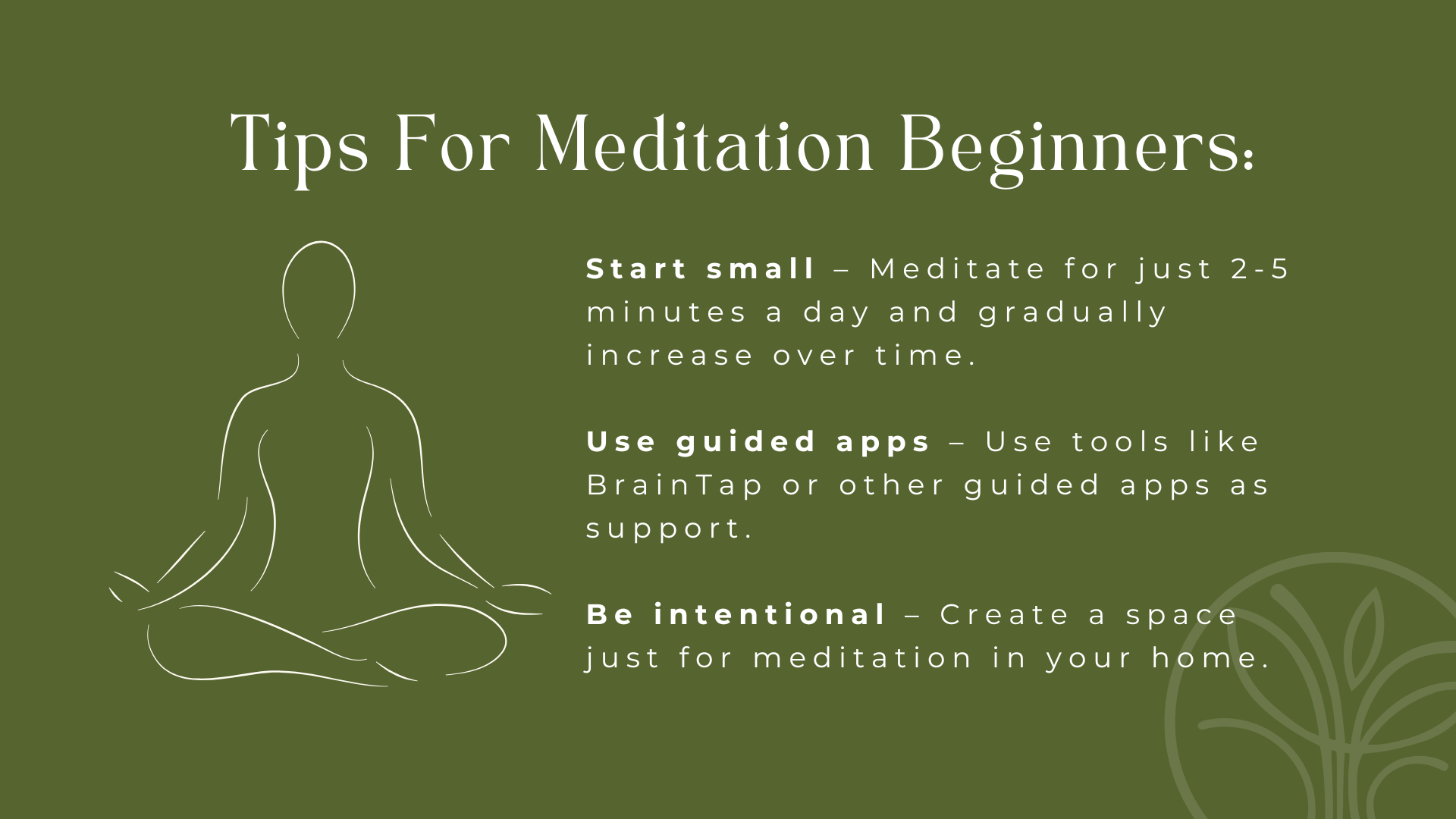
Start small, with just 2 to 5 minutes a day, and gradually build your practice over time. You don't need hours of free time, just a comfortable spot and a willingness to try.
Tools and Techniques to Enhance Your Practice
To support your meditation journey, consider using apps like BrainTap or Insight Timer, which offer guided meditations and soothing sounds to help you relax.
☞ You can read more about BrainTap here.
In meditation, even the mere practice of sitting tall with your back supported can enhance your breathing and focus.
Creating a Dedicated Meditation Space
Even in a busy home, carving out a small, consistent space for meditation can enhance your practice. A corner with a candle, a cozy chair, or a quiet spot by a window signals to your mind that it’s time to pause and reconnect.
Consistency, not perfection, is key. Even a few minutes each day in a dedicated space reinforces the habit and deepens its benefits.
The Journey to Mind-Body Wellness
Meditation is not a quick fix, but a lifelong practice that strengthens resilience, focus, and overall well-being. Like turning a large ship, progress comes gradually, but with patience and persistence, the results are profound.
And remember: maintaining spinal health with regular chiropractic adjustments complements a meditation practice by supporting nervous system balance and overall wellness. If it’s been more than 30 days since your last adjustment, consider scheduling your next visit.