Strategies from Move Well: Stretching
What Are the Best Stretches for Tight Muscles, Hip Pain, and Daily Stiffness?
Tight muscles don’t usually show up all at once. They build quietly from long days at a desk, workouts without enough recovery, or just the pace of everyday life.
The good news: a few targeted stretches can make a noticeable difference in how you move and feel day to day.
Think of stretching less like a one-time fix and more like brushing your teeth. It works best when it’s simple and consistent.
How Do I Stretch Tight Calves the Right Way?
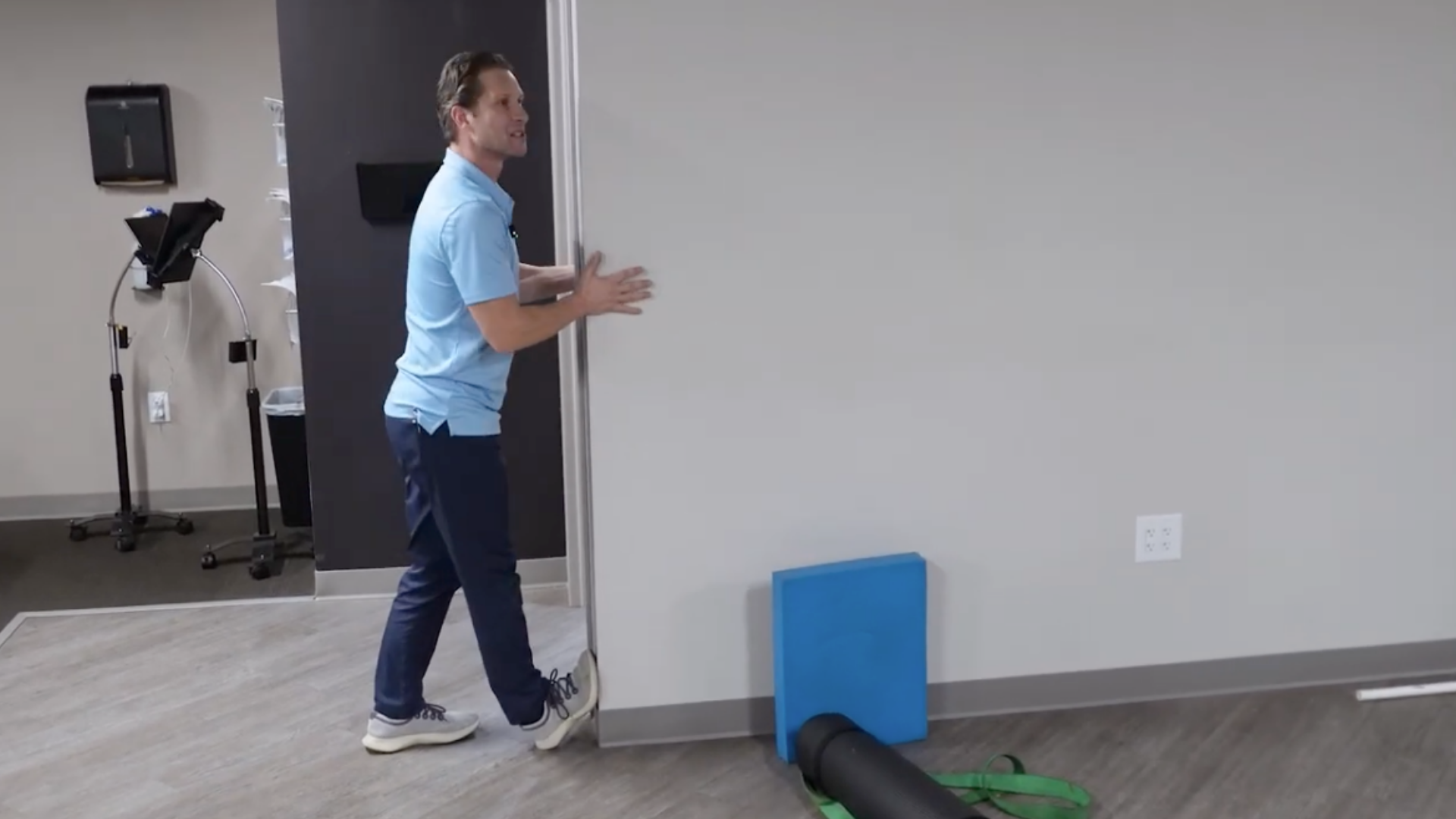
Your calves are actually composed of two different muscles. The gastrocnemius (the one you see) and the soleus (the one you don't) and both muscles need attention.
Use a wall to stretch your calves. Place your foot up on a wall, keep your leg straight, and gently bring your hip toward the wall. Hold for about 15 seconds or three slow breaths. This position helps you reach both the larger outer muscle and the deeper one underneath.
If you sit a lot or notice ankle stiffness, this stretch can help restore some lost movement over time.
What’s a Good Stretch for Tight Hip Flexors From Sitting?
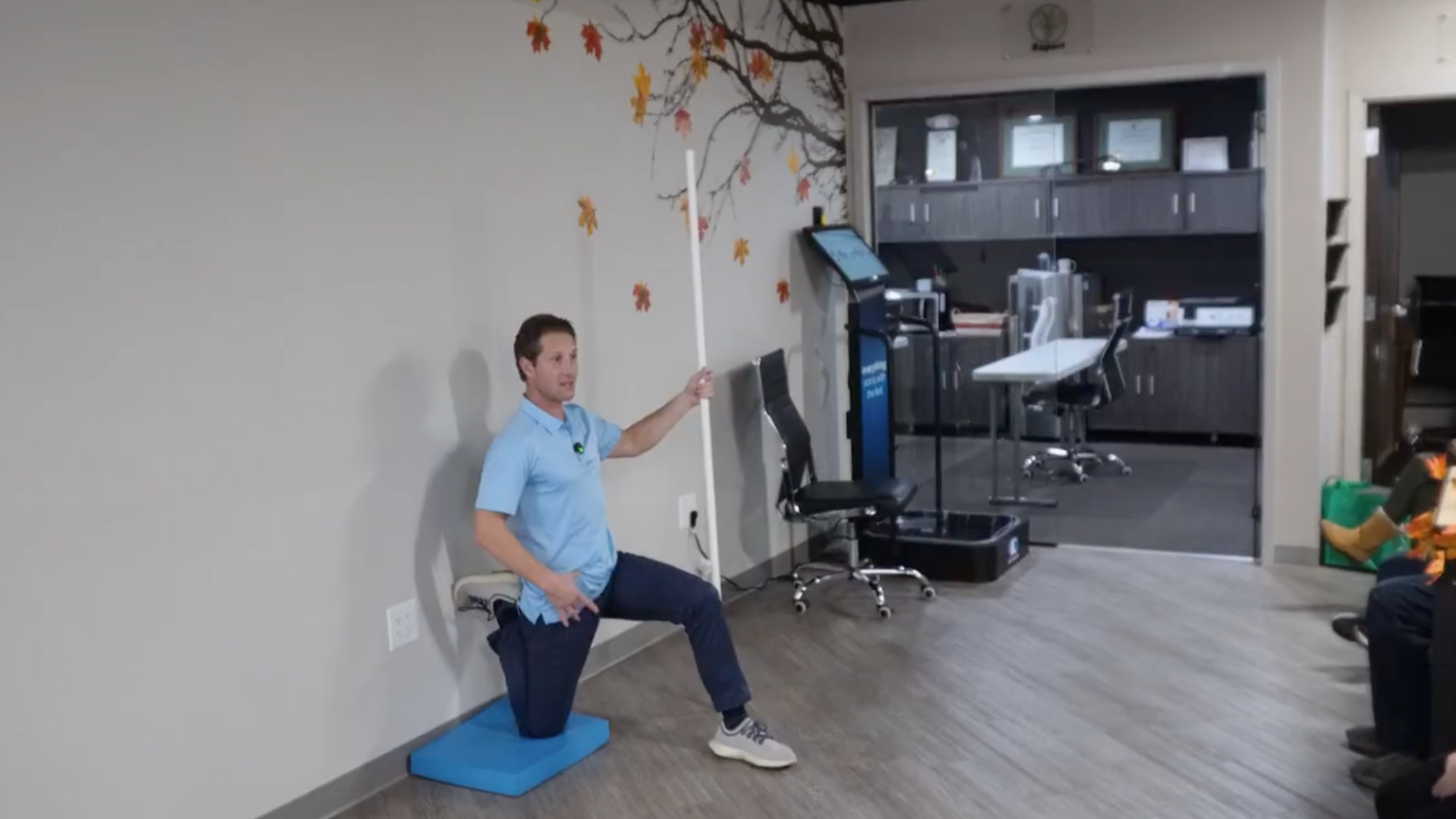
Sitting shortens the front of your hips, which can throw off posture and make your lower back work harder than it should.
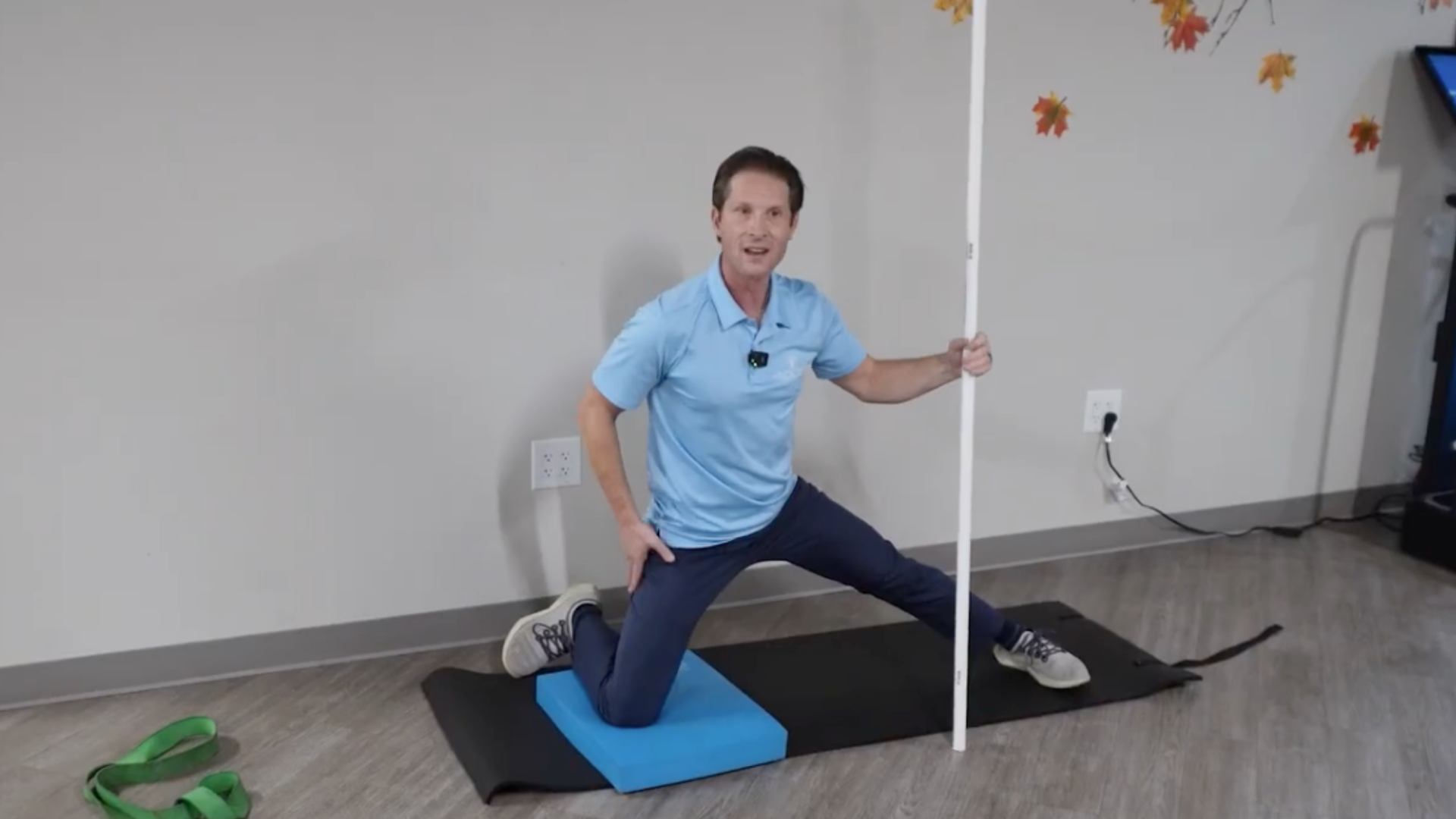
Stretch your hip flexors with support under your knee. Get into a half-kneeling position with a cushion under your knee, then gently shift your hips backward. You should feel the stretch through the front of your hip and thigh.
Done regularly, this helps your hips move more freely, which can take pressure off your lower back.
How Can I Relieve Glute Tightness or Sciatic Tension at Home?
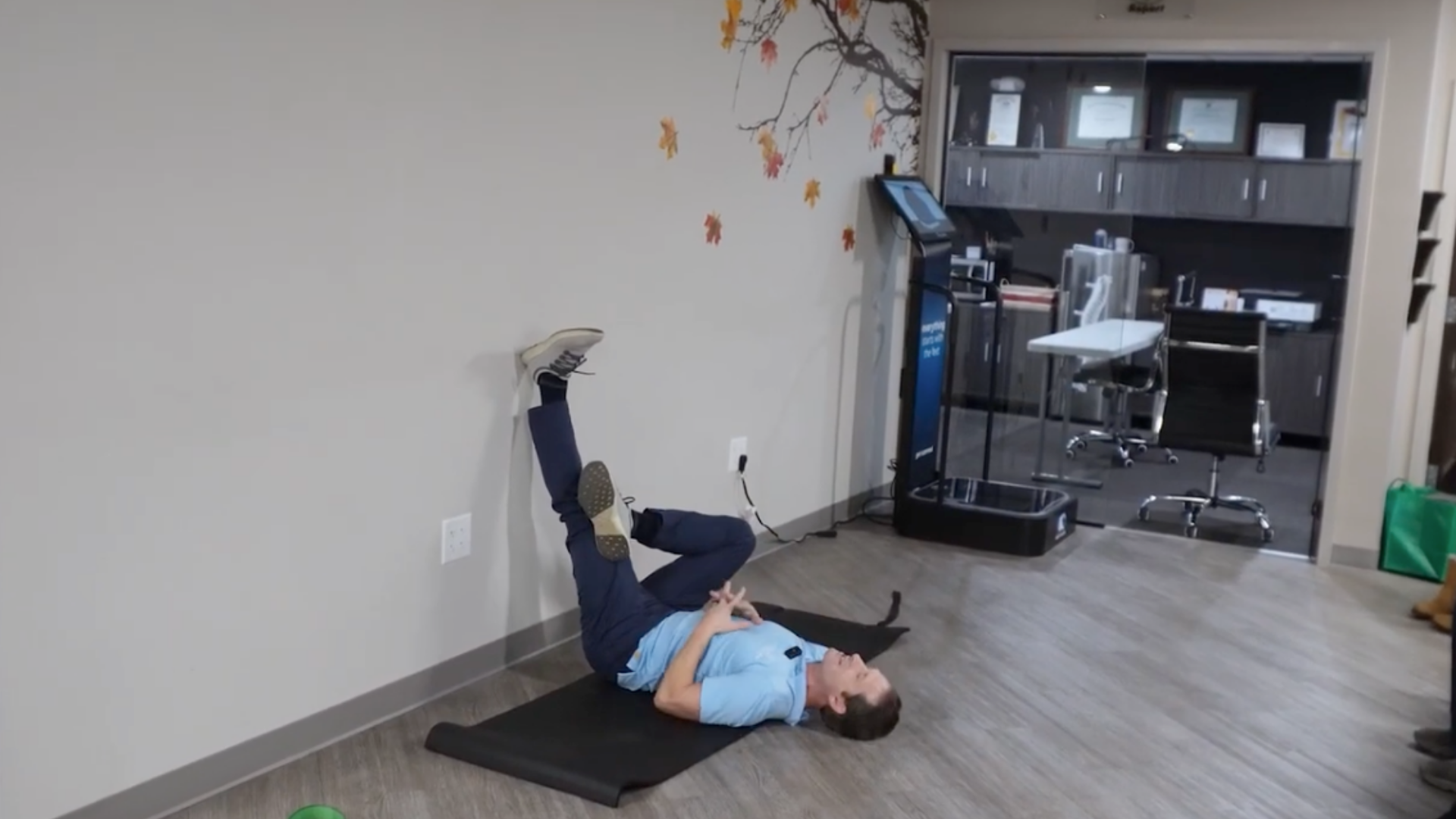
When your glutes are tight, nearby nerves can get irritated. This stretch uses gravity to your advantage.
Lie on your back with your legs up against a wall. Cross one ankle over the opposite knee, then let your hips relax toward the floor. Focus on keeping your pelvis heavy instead of forcing the stretch.
It’s a low-effort position, which makes it easier to stay relaxed and actually let the muscles release.
What Stretch Helps Inner Thigh Tightness and Hip Restriction?
Your inner thighs (adductors) connect into your hips and pelvis, so when they’re tight, you may feel it beyond just your legs.
Stretch your adductors in a supported kneeling position. Place one knee down with your foot pointed forward, then gently push your hips back. You can hold the stretch or slowly pulse in and out of it.
This is especially helpful if you feel stiffness when squatting or moving side to side.
How Do I Improve Shoulder Mobility Without Overcomplicating It?
Shoulders tend to get stiff from both overuse and underuse.
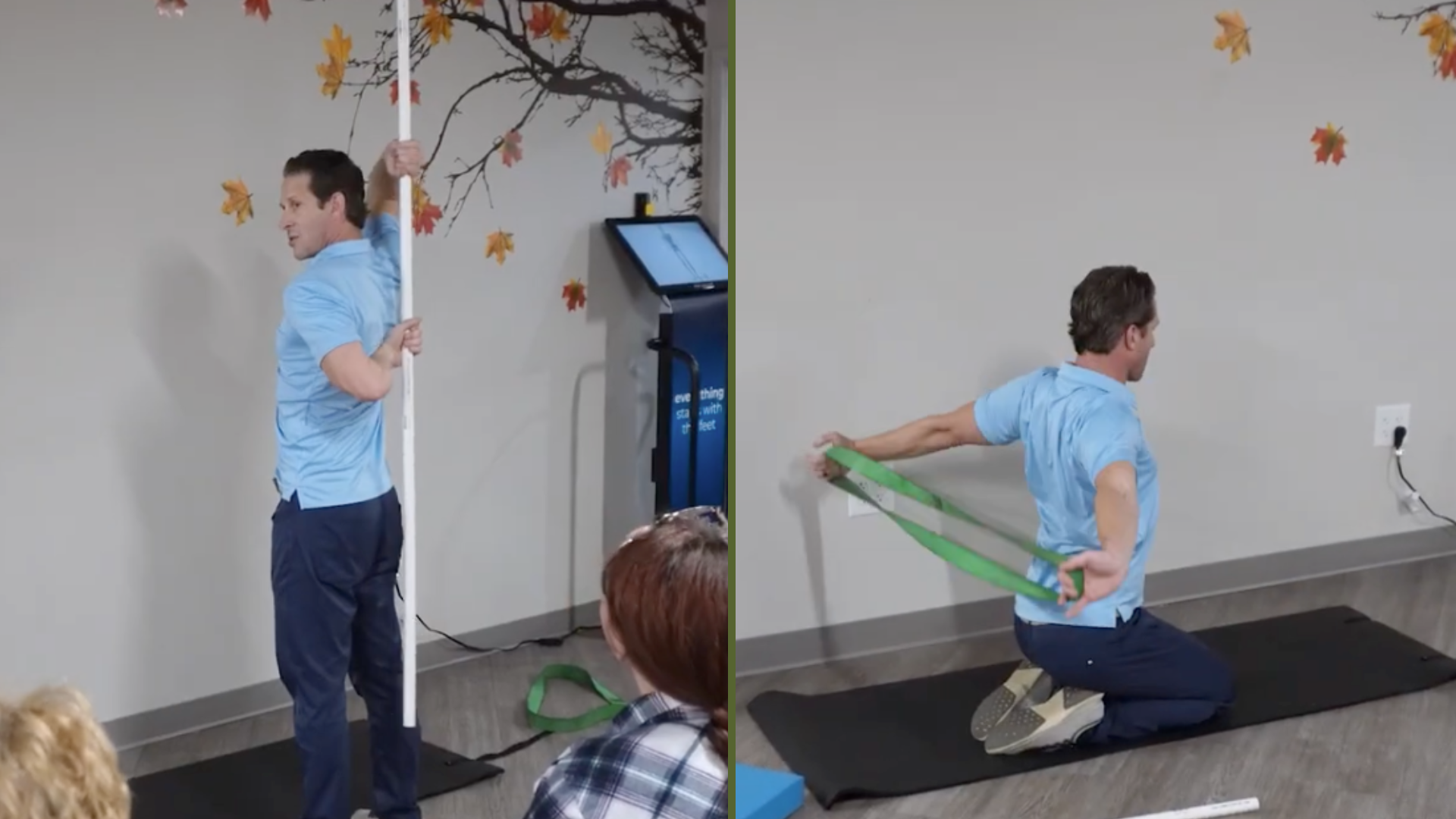
Use a band or dowel for shoulder mobility work. Keep your arms straight and slowly move them overhead and behind you, then return to the front. Move within a comfortable range while keeping good posture.
This exercise helps improve shoulder flexibility and can be done in just a few minutes.
What’s an Easy Way to Stretch My Neck Without Overdoing It?
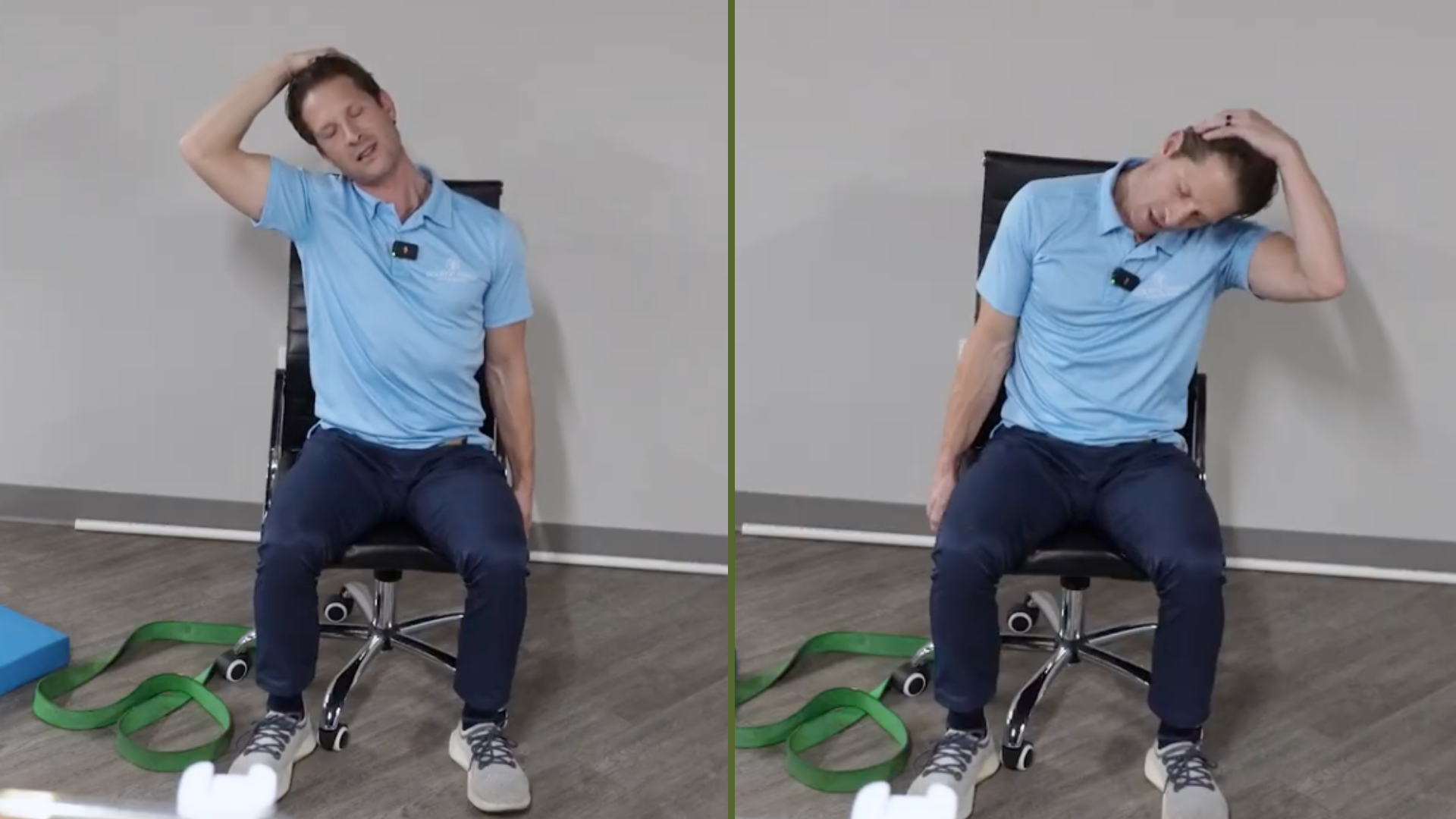
Neck tension often comes from posture and screen time. A simple visual can help guide your movement.
Use the “clock method” for gentle neck stretching. Imagine a clock on top of your head. Move your chin toward your chest (like 10:00), then angle toward the opposite side (like 2:00). Use light assistance from your hand, if needed.
Keep the movement slow and controlled. The goal is to explore range, not force it.
If you’re looking for more neck tension support, you can check out our 5-Step Action Plan for Neck Pain.
How Often Should I Stretch to Actually See Results?
Consistency matters more than intensity.
A few minutes a day goes further than one long session once a week.
Keep your stretches slow, steady, and relaxed. Your body responds better when it doesn’t feel like it’s being pushed into position.
Over time, these small inputs can help you move with less resistance and more ease throughout your day.